Clopay Garage Door Repair in New Britain: A Homeowner’s Guide
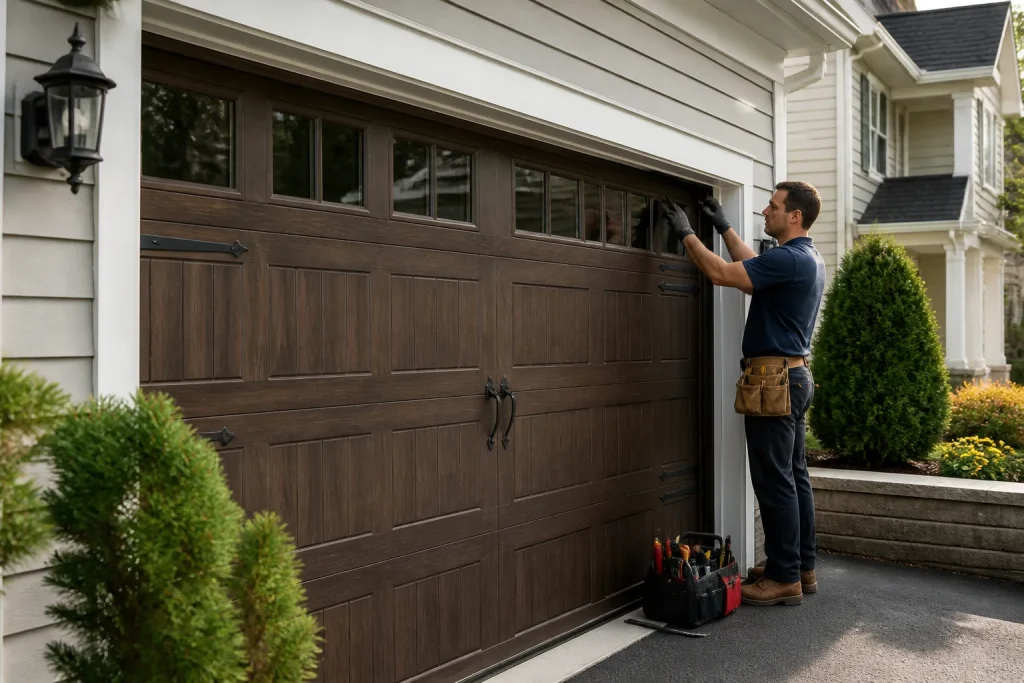
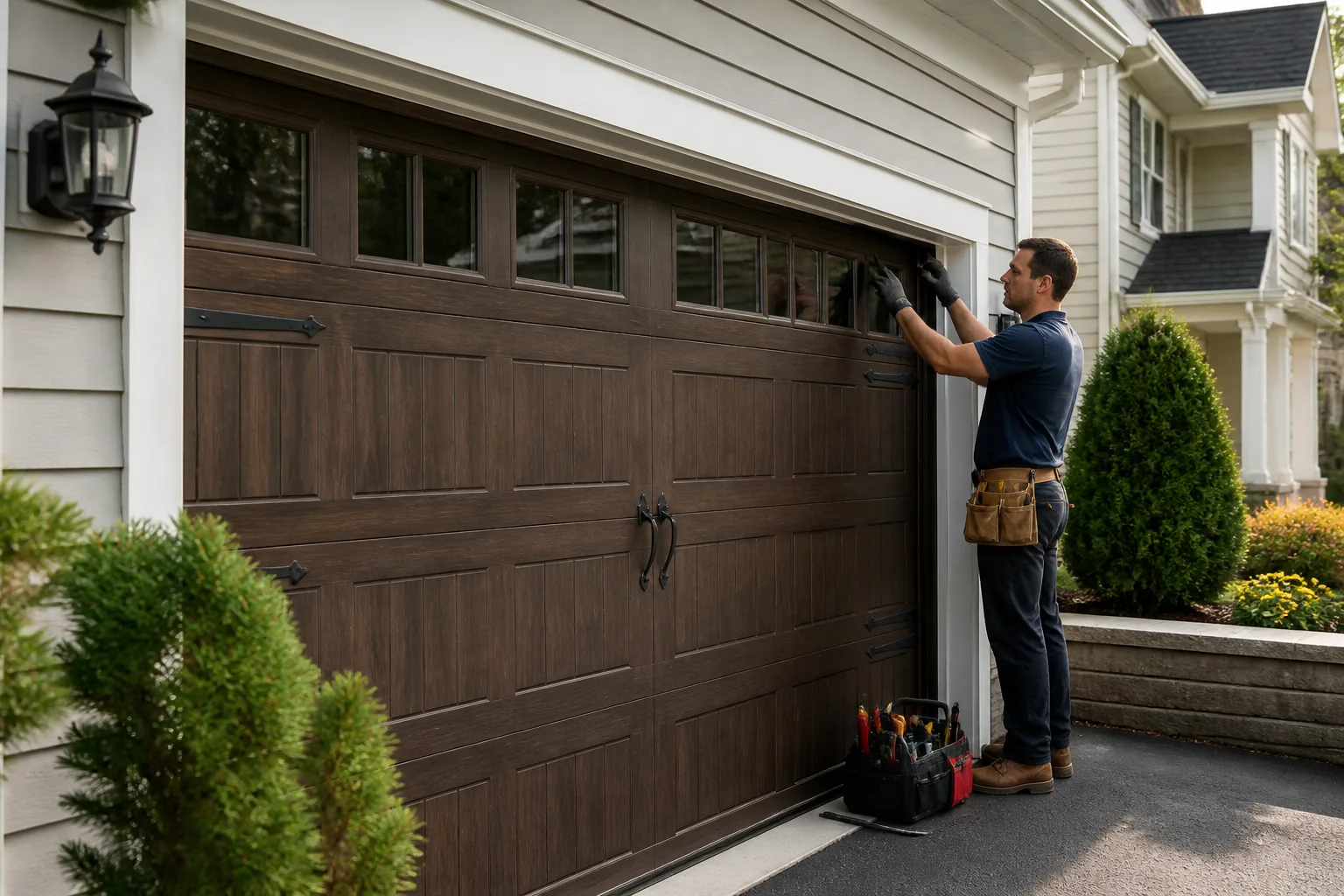
Most Clopay repairs in New Britain go wrong for the same quiet reason: the door gets treated like every other garage door on the street. Clopay’s Gallery and Coachman series use a proprietary strut reinforcement system that standard replacement hardware doesn’t fit, and that one mismatch sends homeowners back for a second repair call more often than any other brand issue we see. If your Clopay door is sticking, sagging, or refusing to close evenly, the fix starts with knowing which series you own and which parts actually belong on it.
If you’d rather not DIY it, call (855) 959-3390 and we’ll take a look.
Key Takeaways
- Clopay is the most installed brand in Connecticut, which also makes it the most misdiagnosed.
- Gallery, Reserve, and Coachman doors in New Britain fail in different ways and at different ages.
- The EZ-SET spring system needs a different adjustment approach than a standard torsion spring.
- Freeze-thaw cycles here punish the weather seal more than the panels.
- Panel and hardware availability drive the real cost, not the labor.
Which Clopay series do New Britain homeowners actually have?
Most Clopay doors we see around New Britain fall into three series, and each has its own personality once it starts aging. The series badge is usually stamped on a label inside the door or on the end stile, and finding it saves a lot of guessing.
- Gallery: The most common premium series here. Long panel or short panel steel with a strut reinforcement system. Failures tend to show up as strut rattle and hinge wear well before the panels themselves give out.
- Reserve: Heavier, often wood-grain embossed, sometimes with insulated cores. These tend to develop roller and track noise rather than panel denting, because the door weight stresses the hardware sooner.
- Coachman: The classic raised-panel look, very common on New Britain’s older housing stock. Coachman doors run into bottom-section rot and seal deterioration sooner than the higher-end lines.
Age matters as much as series. A Gallery door that’s been through a dozen Connecticut winters has usually had its rollers, hinges, and bottom seal replaced at least once, and any new repair should account for what’s already been swapped. A door someone patched with generic hardware years ago is exactly where the misdiagnosis starts.
Why does the EZ-SET spring system need a different approach?
Clopay’s EZ-SET torsion system is adjusted differently from a standard torsion spring, and treating the two as the same job is where problems begin. On a standard torsion setup, the spring is wound against the shaft and the tension lives entirely in the spring. EZ-SET moves the tension setting to a winding collar with a locking mechanism, which changes how the spring is released, retensioned, and inspected.
When a technician assumes it’s a standard spring, a few things can happen:
- The winding collar gets forced instead of being released the correct way, and the collar or spring anchor bends.
- Tension gets set by feel rather than by the door’s balance point, so the opener works harder than it should.
- The wrong spring gets ordered, because EZ-SET sizes don’t map cleanly to standard wire gauges.
- The door ends up out of balance, and the panels start to sag or the cables wear unevenly.
Torsion and extension springs operate under extreme tension, and a spring under load can cause serious injury if it’s released the wrong way. This is not a DIY job. It’s also not a job for a general handyman, which is why so many Clopay owners end up calling a specialist after a first attempt went sideways. Our technicians have up to 13 years of experience with brand-specific spring systems, and we treat EZ-SET as its own category, not a variation on a standard spring. If your door won’t lift or slams down, that’s a garage door spring repair call you shouldn’t put off.
Clopay panel replacement: what should you expect?
Panel replacement on a Clopay door is usually more about availability and finish match than it is about labor. The panel itself has to come from Clopay through a dealer, and lead times vary by series, panel style, color, and whether the door is insulated. A single panel for a Coachman in a standard color is often the simplest case. A Gallery long panel in a less common color can take longer, and occasionally the color has been discontinued for that line.
Finish is the part homeowners underestimate. Even when the replacement panel is the same nominal color, a door that’s spent years in Connecticut sun has faded slightly. A brand-new panel next to weathered ones can look a shade off. That’s normal, and often it settles visually once the whole door is cleaned and sealed.
When is a full section replacement cheaper than chasing a single panel? A few situations point that way:
- Two or more panels are damaged on the same door.
- The panel style or color is discontinued.
- The door is older and the surrounding panels are already showing corrosion at the seams.
- The labor to safely remove and reinstall a single panel equals a meaningful share of a new section.
We’d rather tell you that up front than order a panel that arrives three weeks later and doesn’t quite match. For a straightforward panel or section fix, garage door repair is the right starting point.
How does the weather seal hold up to Connecticut freeze-thaw cycles?
Clopay’s weather seal system takes more abuse in New Britain than the door panels do. Freeze-thaw cycles here work the bottom seal hard: water collects under the door, freezes overnight, expands, and pulls the seal away from the retainer. Repeat that through a Connecticut winter and the seal loses its shape and stops making contact.
The fix isn’t just “replace the bottom seal.” The profile matters. Clopay uses specific seal profiles that seat into a matching retainer, and a generic universal seal will technically fit but won’t seal the same way. When you ask for a replacement, name the profile: the standard Clopay bottom seal versus the wider insulated-door profile versus the brush-style seal used on some commercial and specialty doors. Getting the right one the first time saves another trip.
While the seal is off, it’s worth checking the retainer itself. The aluminum channel that holds the seal can corrode at the ends, and if it does, a new seal won’t stay put. The same check covers the side and top seals, which shrink and harden over time and let in drafts and, in New Britain, the occasional determined mouse. A properly sealing door is also easier on the opener, which doesn’t have to fight a drafty door that’s binding against a swollen seal.
What are the warranty transfer rules if you sell the house?
Clopay’s warranty is generally transferable to a subsequent owner, but only under specific conditions, and this is the detail most New Britain homeowners discover too late. In most cases, the transfer requires documentation: proof of purchase, the original installation records, and often a formal transfer request within a set window after the sale. Miss any of those and the new owner inherits a door with no warranty coverage.
A few practical points:
- Keep the original purchase and installation paperwork with the home’s records, not buried in a drawer.
- If a door was installed by a prior owner, request the documentation during the sale inspection rather than after closing.
- Ask about the warranty status before you buy a house with a Clopay door. It’s a legitimate negotiating point.
- Any repair done with non-Clopay parts can affect coverage on the affected component, so note what’s been replaced.
If you’re buying or selling in New Britain and the door’s history is unclear, a quick inspection tells you what’s original, what’s been repaired, and what the warranty situation probably looks like. We work on Clopay and seven other major brands, so we’re not guessing at which parts are factory and which aren’t. From a stuck opener to a full new installation, one call covers it.
When should you call a pro instead of waiting it out?
Some Clopay issues can wait a few days. Others can’t. The dividing line is pretty clear once you know what to look for.
Call now:
- The door won’t lift, or slams down when you release it. That’s a spring problem, and springs are dangerous.
- A cable is frayed, hanging loose, or off its drum.
- The door is visibly crooked on one side.
- The opener runs but the door doesn’t move, or the door reverses for no reason.
Can usually wait a few days:
- The door rattles, squeaks, or sounds noisier than it used to.
- The bottom seal is torn or no longer touching the floor.
- A single panel is dented but the door operates fine.
If you’re not sure which category your door is in, it’s worth having someone look. Our technicians arrive already familiar with the specific hardware in your garage, and emergency service is a core part of what we do, not a premium add-on. A door that won’t close leaves the house open, and that’s a call worth making sooner rather than later. Opener issues are often handled alongside door repairs, and that’s where garage door opener repair comes in.
Related services in New Britain: if the diagnosis turns out to be a worn opener on a Raynor or a LiftMaster motor that’s given up, we handle that in the same visit as the door itself. Clopay, Chamberlain, Genie, and the rest of the major brands all fall under the same roof here. We’ve seen enough Clopay doors to know that a “door problem” is sometimes really an opener problem, and it’s better to know which one before anyone touches a wrench.
The Bottom Line
Clopay doors in New Britain fail in predictable, brand-specific ways. The EZ-SET spring needs a different approach than a standard torsion spring, the strut system on Gallery and Coachman doors doesn’t take generic hardware, and the weather seal takes a beating from freeze-thaw cycles that no universal seal addresses well. Panel availability and warranty transfer rules are the two details homeowners most often find out about too late. Knowing the series and the specific parts matters more on a Clopay than on almost any other brand.
If you’re in New Britain and need help, New Britain Garage Door Repair Pros offers free estimates – call (855) 959-3390. We’re a garage door specialist, not a generalist, so every technician and every part in the truck is specific to the job. You can start at New Britain Garage Door Repair Pros to see the full range of what we cover, from repairs to complete new-door installation.
Frequently Asked Questions
Most Clopay repairs in New Britain fall into a few common price ranges depending on the part: a roller and hinge tune-up is usually on the lower end, a spring replacement sits in the middle, and a panel or section replacement costs more because of the part itself and the ordering lead time. The written estimate you get before work starts is the price you pay; nothing changes once we see the door. Call (855) 959-3390 for an exact quote – estimates are free.
Many Clopay repairs can be done the same day, especially hinge, roller, and spring jobs where the right parts are on hand. Panel replacements depend on Clopay’s availability for your specific series and color, which sometimes means a short wait while the part comes in. We’ll tell you up front which category your repair falls into. Call (855) 959-3390 and we’ll get you scheduled.
The most common reason is generic replacement hardware. Clopay’s Gallery and Coachman strut systems and the EZ-SET spring setup don’t take standard parts cleanly, and a repair done with the wrong ones stresses the door in a new way. The second repair often costs more than the first would have. Call (855) 959-3390 and we’ll diagnose the actual cause before touching anything.
The local pros we connect you with are licensed and insured as their state requires. Our technicians have up to 13 years of experience with Clopay and the other major brands, and work is quoted and agreed before anything starts. Call (855) 959-3390 for a free estimate.
Written by the team at New Britain Garage Door Repair Pros.
Need Garage Door Help?
Call New Britain Garage Door Repair Pros - the local pro we connect you with is licensed and insured, here with fast after-hours help in New Britain.
(855) 959-3390