Last updated November 21, 2026
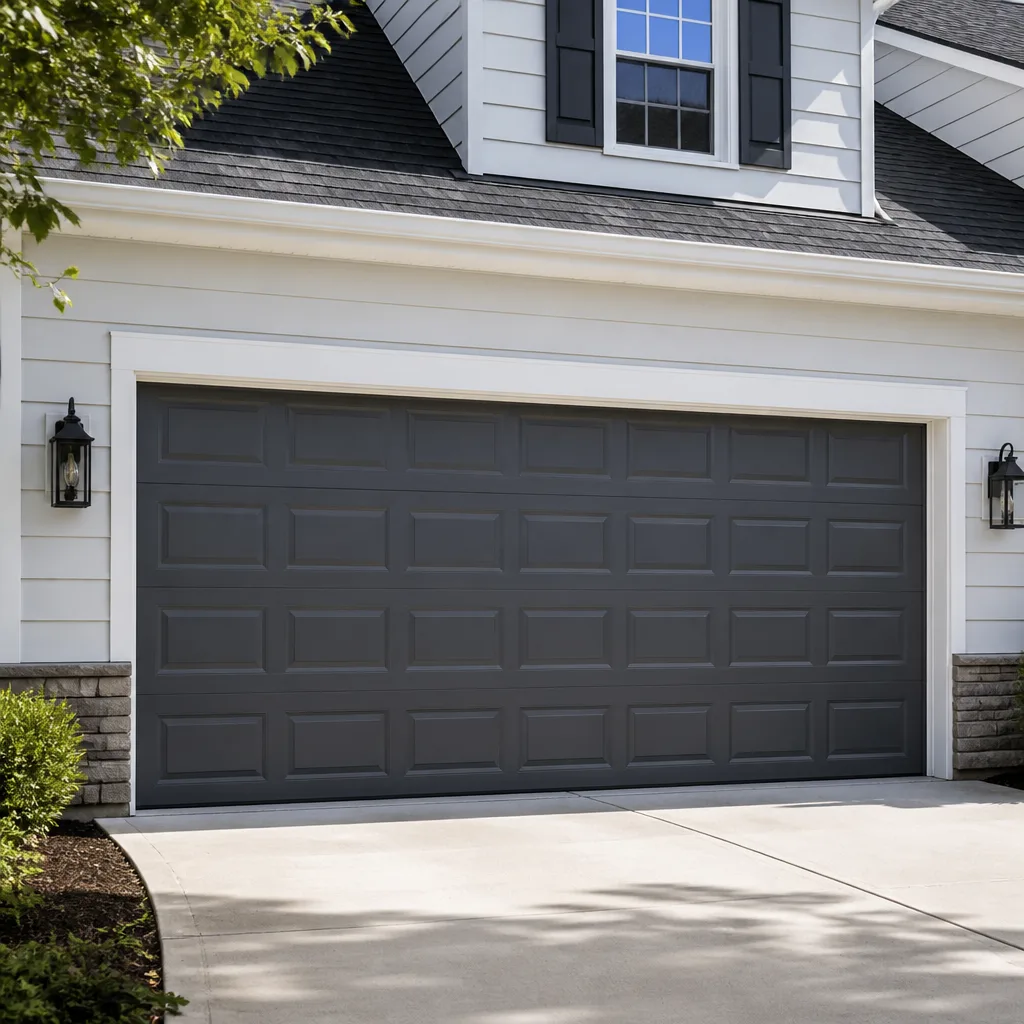 Raised-panel steel
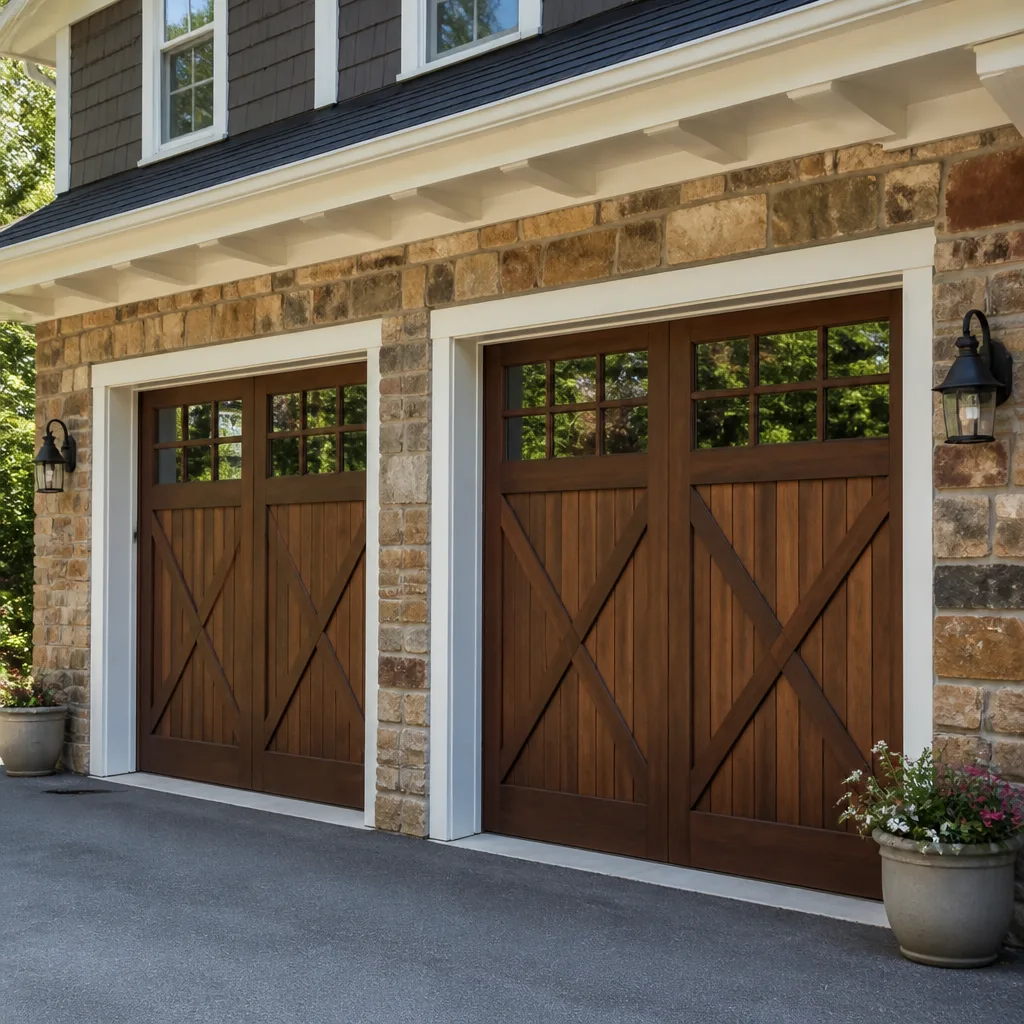 Carriage house
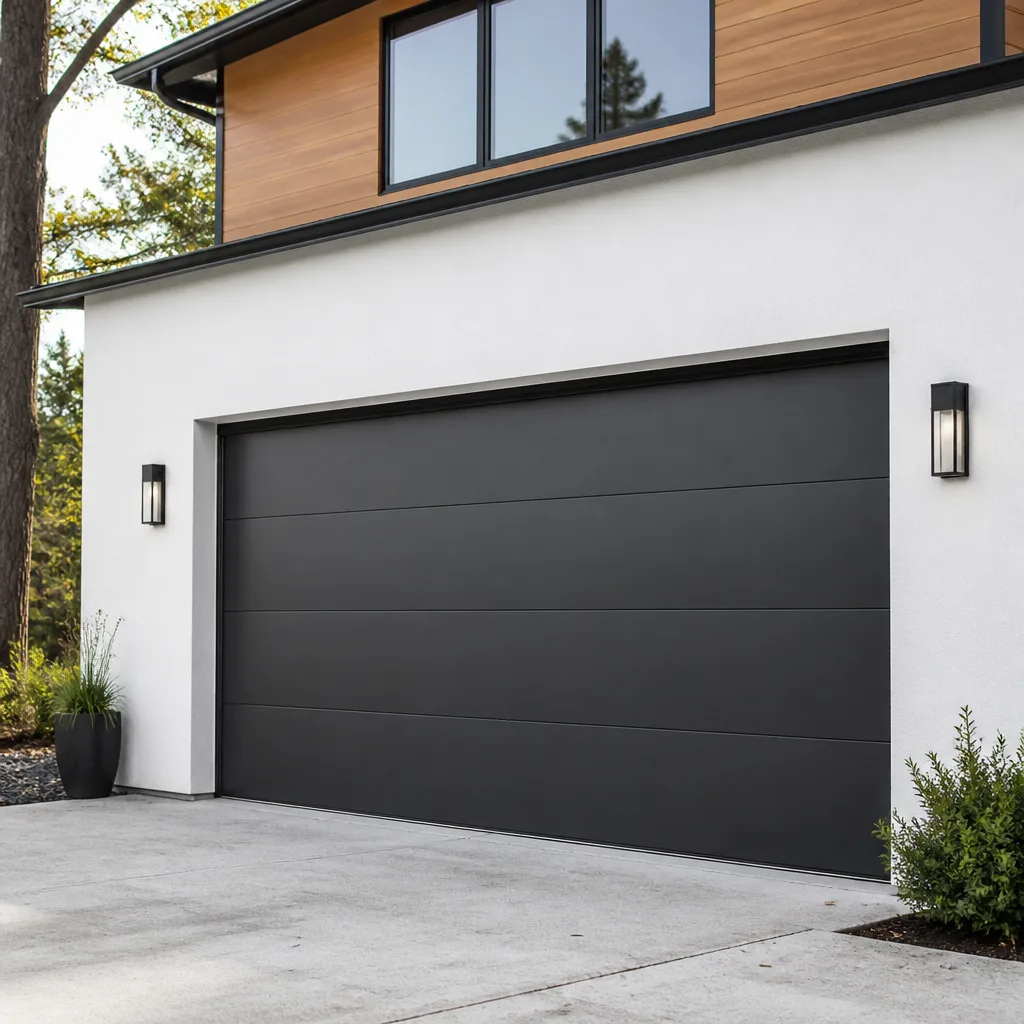 Modern flush
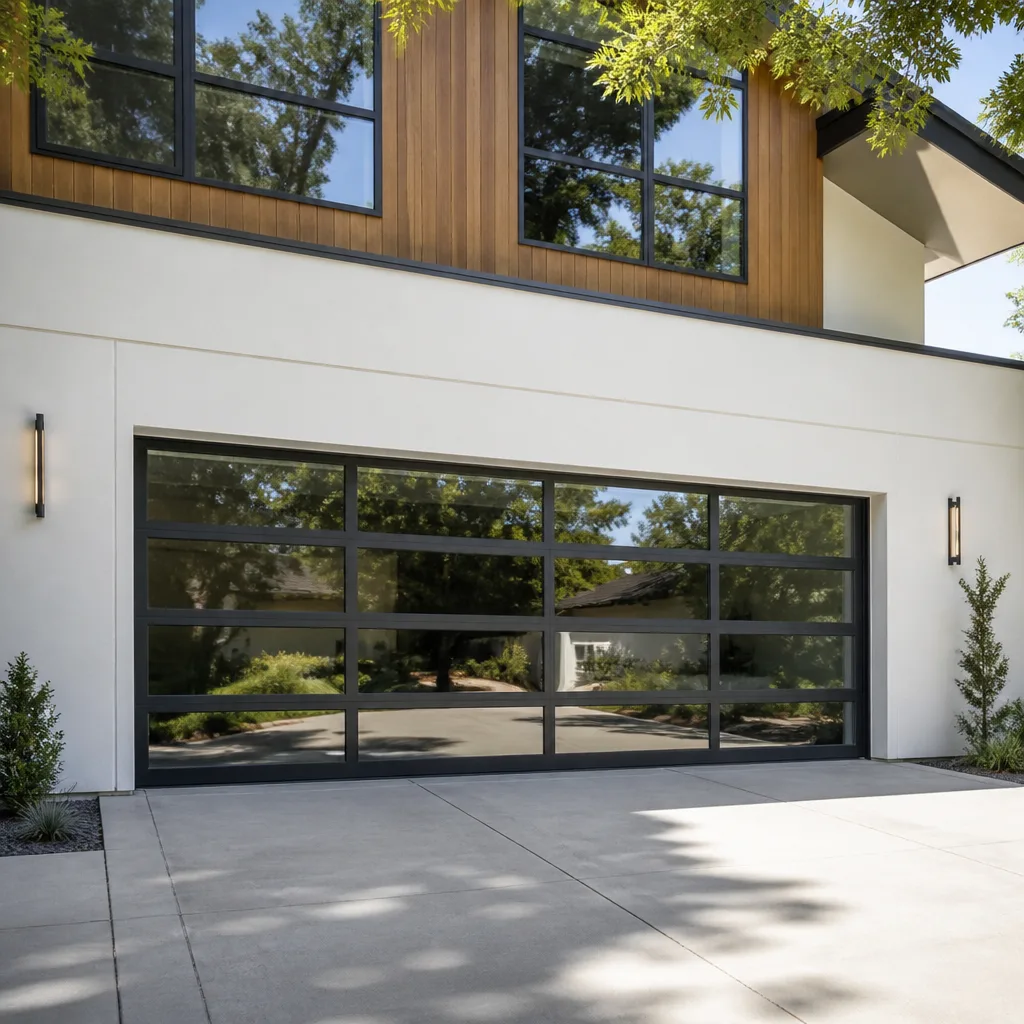 Full-view glass
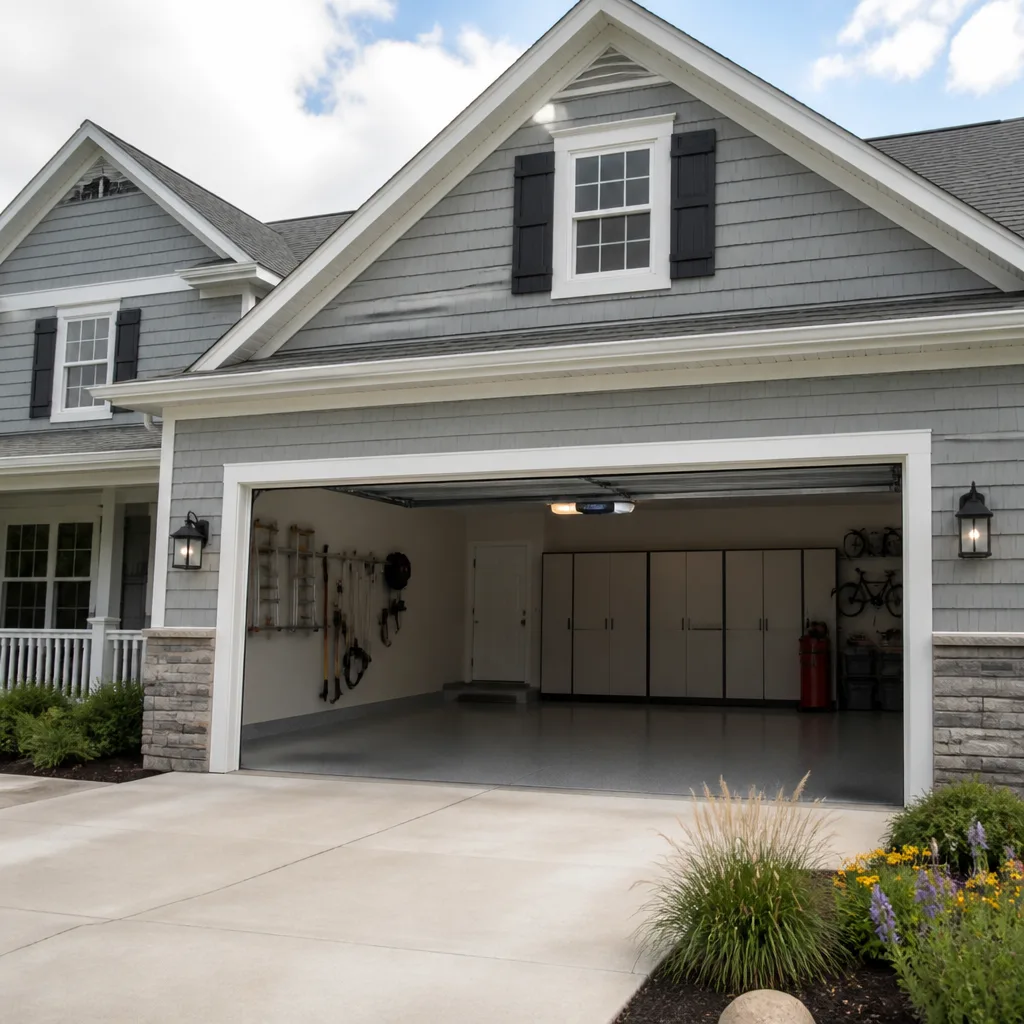 LiftMaster openers
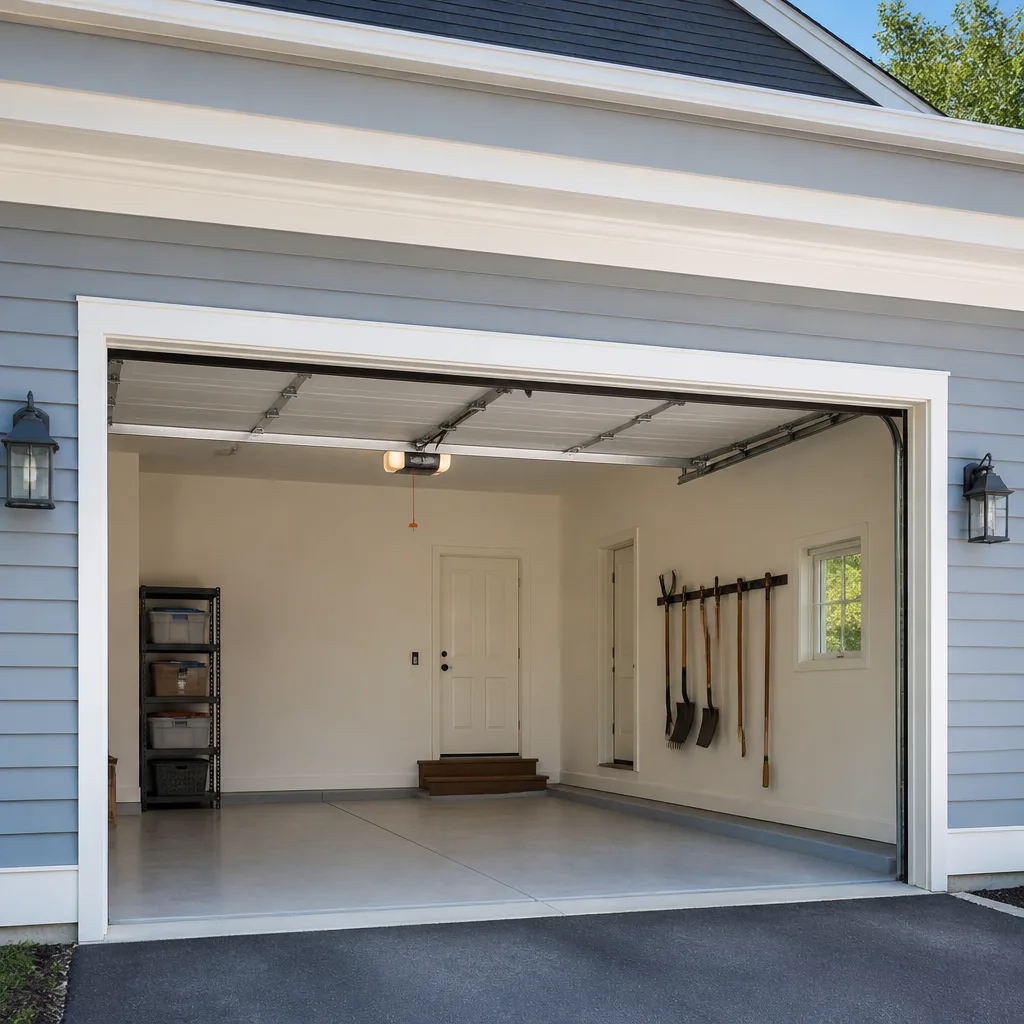 Chamberlain openers
Full 25-point door and opener safety check with every visit - springs, cables, rollers, tracks, and your LiftMaster or Chamberlain opener included
You get a price before we start. It does not change when the pro arrives.
Get your free estimateDIY vs Professional Garage Door: The New Britain Homeowner’s Decision Guide
Most homeowners think the DIY question comes down to confidence. It doesn’t. It comes down to physics. A torsion spring at rest holds nothing. A torsion spring that’s been wound to balance a 150-pound door holds enough stored energy to break a wrist, shatter a jaw, or throw a winding bar across a garage in the time it takes a hand to slip. That’s not a skill gap. That’s an asymmetry, and it’s the single most important thing to understand before you decide what to touch and what to hand off. This guide breaks the garage door down task by task, so you know exactly which jobs in a New Britain garage are reasonable for a careful homeowner and which ones can hurt you.
Quick Answer
The honest answer: some garage door jobs are genuinely fine for a homeowner, and some are not worth the risk at any skill level. Weatherseal, lubrication, sensor alignment, and track cleaning are safe, cheap, and worth doing yourself. Springs, cables, bottom brackets, and structural framing are not – they carry lethal stored tension and require a trained technician. Everything in between depends on your tools, your warranty, and whether local code requires a licensed contractor for permit compliance. The dividing line isn’t confidence. It’s consequence.
Styles & brands we work with
- Raised-panel steel
- Carriage house
- Modern flush
- Full-view glass
- LiftMaster openers
- Chamberlain openers
Table of Contents
- The Asymmetric Risk Test: Sorting Jobs by Consequence, Not Skill
- What a Homeowner Can Safely Do (And Should)
- What Requires a Licensed Technician – No Exceptions
- The Real Cost Comparison: Tools, Time, and Error
- How Connecticut Code and Permits Affect DIY Work
- What DIY Does to Your Manufacturer Warranty
- When DIY Actually Makes Financial Sense
- Common Mistakes to Avoid
- When to Call a Professional
- Frequently Asked Questions
The Asymmetric Risk Test: Sorting Jobs by Consequence, Not Skill
Here’s the framework we want every New Britain homeowner to carry with them. Before you pick up a tool, ask a different question than “Can I do this?” The right question is “If this goes wrong, what’s the worst case?” For some jobs, the worst case is a crooked seal or a door that chirps. For others, it’s a hospital visit or a door that falls on a car in the driveway.
We call this the asymmetric risk test. A task has asymmetric risk when the potential downside is ten times the potential savings. Spring replacement is the clearest example. A homeowner might save a few hundred dollars in labor. But the winding process on a torsion spring involves holding back hundreds of pounds of torque with a steel bar, and one wrong turn can release all of it at once. That’s not a trade most people should make.
In our experience across New Britain garages, the tasks sort cleanly into three buckets:
- Low risk, high value: weatherseal replacement, track lubrication, sensor alignment, visual inspections, tightening bolts, cleaning photo-eye lenses. These cost little in tools and time, and a mistake is annoying rather than dangerous.
- Medium risk, variable value: roller replacement, opener remote pairing, belt tension adjustment, track adjustment. Doable for a mechanically inclined homeowner with the right tools, but a mistake can strain the opener or misalign the door.
- High risk, no upside: torsion springs, extension springs, cables, bottom brackets, winding cones, panel replacement on a loaded door, and any framing or header work. The consequence here is out of proportion to the savings, full stop.
The reason this matters more in a place like New Britain is that the housing stock is old. Many garages here were built decades ago and have been retrofitted, patched, or re-sprung at least once. The hardware in a New Britain garage is often a mix of original and replacement parts from Clopay and Wayne Dalton doors, and it’s sometimes been adjusted by three different hands over the years. That sort of history is exactly where a homeowner’s casual DIY attempt gets dangerous, because the door isn’t behaving the way the manual describes.
What a Homeowner Can Safely Do (And Should)
Let’s flip the script for a moment. We don’t want to talk you out of every wrench. There is real, honest maintenance in a garage door, and doing it yourself saves money and keeps the door working longer. These are the jobs we’d encourage a careful homeowner in New Britain to take on.
- Replace the bottom weatherseal. The rubber seal along the floor cracks and flattens, especially through a Connecticut freeze-thaw cycle. Pop the old seal out of its channel, slide the new one in, done. One of the best dollars-per-hour jobs on the whole door.
- Lubricate the moving parts. Rollers, hinges, and the torsion tube benefit from a garage-door-rated lubricant a couple of times a year. A can of spray lube and ten minutes is all it takes, and it quiets a squeaky door noticeably.
- Align the safety sensors. Two photo-eye lenses near the floor need to see each other. Wipe them clean and nudge them back into line if the door won’t close. This is one of the most common service calls we get, and it’s often a two-minute fix.
- Clean and inspect the tracks. Wipe the inside of the vertical and horizontal tracks with a damp cloth. Don’t lubricate the tracks – that attracts grit and causes binding. Just clean them and look for dents or loose bolts.
- Tighten exposed bolts and hinges. A door that rattles is usually just loose hardware. Snug up the bolts you can see, but don’t overtighten the ones on the hinges.
- Test the auto-reverse. Place a roll of paper towels in the door’s path and close it. If the door doesn’t reverse on contact, stop using it and get it looked at.
- Check the balance. Pull the manual release to disconnect the opener, lift the door halfway, and let go. A well-balanced door stays put. If it slams or drifts, that’s a spring or cable issue – time to call.
Notice what’s missing from this list: anything involving the springs, the cables, or the structural framing. Everything above is low-consequence work. A botched weatherseal replacement makes the door drafty. A botched balance test just tells you it’s time to stop.
What Requires a Licensed Technician – No Exceptions
There’s a strong temptation to assume that because a job looks mechanical, a careful person can do it slowly and safely. That logic works for a lot of home repair. It does not work on a torsion system. Here’s why.
A torsion spring is wound so tightly that it stores the energy to carry the full weight of the door. When the door is closed, the spring is fully loaded. When it’s open, the spring is nearly relaxed. That means the most dangerous moment in the whole system is when the door is down and the spring is at maximum tension – the opposite of what most people expect. To replace that spring, a technician has to release the tension using two winding bars in a controlled sequence, then rewind the new spring to an exact number of turns. Both steps are precise, both are unforgiving, and neither tolerates a slip.
The other jobs in this category behave the same way:
- Torsion and extension springs. Extreme stored tension. Quiet, old springs can fail without warning, which is exactly why a professional diagnoses before touching.
- Lifting cables. High tension, sharp ends, and a snap-back hazard. A cable that lets go can whip across the garage. Never touch one that’s loose or frayed.
- Bottom brackets. They hold the cables under load. Under-torqued or over-torqued, they’re a trap.
- Panel replacement on a loaded door. Swapping a section means managing weight and spring tension at the same time. Not a homeowner proposition.
- Structural framing, header boards, and rail mounting. This is where a builder’s judgment and local code both matter, and where a wrong move threatens the whole door’s stability.
If there’s one sentence to carry away from this guide, it’s this: springs and cables are not a DIY job. Not because we think homeowners aren’t capable, but because a mistake in this specific zone is catastrophic and irreversible. For those, you want a specialist, not a generalist. Our garage door spring repair team handles torsion and extension work as a matter of course, and we’ve seen how often a door that “just needs a spring” turns out to have a cable and bracket issue hiding behind it.
The Real Cost Comparison: Tools, Time, and Error
Let’s put real numbers on the table, because “it’s cheaper to DIY” is only true if you ignore tools, time, and the cost of fixing a mistake. Here’s how the math actually works for the most commonly attempted repairs in a Connecticut garage.
For a spring repair, the professional side typically runs a few hundred dollars for a single spring, and roughly double that for a matched pair, because both springs are almost always replaced together. A homeowner attempting the same job needs two winding bars, the correct replacement springs matched to the door’s weight, and the knowledge to identify the right wire gauge and inside diameter. Springs alone from a supplier run a modest amount – but the tools plus the risk of ordering the wrong spring plus the possibility of a redo push the gap between DIY and professional down to a narrow margin. And that margin doesn’t include the emergency room.
Here’s a rough comparison across the common jobs:
- Weatherseal replacement: DIY saves meaningfully. The material is cheap and the job is quick.
- Sensor alignment: DIY saves almost everything, as long as the sensors aren’t damaged. This is a five-minute job if the hardware is intact.
- Lubrication and tightening: DIY is the right call. No tools beyond a can of spray and a wrench.
- Opener repair or replacement: DIY rarely works out. Modern openers from LiftMaster, Chamberlain, and Genie need correct travel limits, force settings, and safety-reverse calibration. Get it wrong and the door can reverse on a person or run past its stops. For anything beyond the remote-pairing kind of fix, garage door opener repair is a better use of money than a second attempt.
- Spring replacement: DIY is a false economy. Tool cost, wrong-part risk, and injury exposure cancel the savings and then some.
- Full door replacement: Not a DIY job by any definition. It requires measuring, ordering, and resetting the whole door and spring system.
The theme is consistent. The farther a task sits from the wall-mounted spring and cable hardware, the more the DIY math works. The closer it gets to the springs, the more the math falls apart. For a full breakdown of what professional work looks like, see our garage door repair page.
How Connecticut Code and Permits Affect DIY Work
Here’s a piece of the DIY decision that a lot of homeowners don’t think about until they’re midway through. Some garage door work touches permitting. Local code varies by municipality, and the rules that apply to a full door replacement or structural change are different from the ones that apply to swapping a weatherseal.
In general terms, cosmetic maintenance – lubrication, seals, sensors, bolts – doesn’t require a permit. Structural work does. That includes anything that involves the header, the framing, or the way the door is attached to the building. A full door replacement is often treated as a permit item because it changes the opening and the weight load. The right move is to ask the New Britain building department directly about your specific project before you start. They’ll tell you whether a permit is needed and whether the work has to be done by a licensed contractor.
For openers and electrical connections, the picture gets stricter. A hardwired opener connects to household power, and in Connecticut that’s electrical work. Most homeowners shouldn’t be running new circuits or altering existing wiring themselves, and if the code in your municipality requires a licensed electrician for the connection, a DIY attempt can create a compliance problem at resale down the road. The same logic applies to any door work that touches structural framing. This is one of the reasons we say that certain garage door tasks require a licensed contractor for permit compliance, not just for safety – a door installed to spec but without the right paperwork can complicate a home sale or an insurance claim later.
The simplest way to handle this: call your city’s building department and ask the specific question. Then, if you decide a pro is needed, let us handle the work to the applicable standards. Our technicians have up to 13 years of experience, and permit-aware installation is part of how a job gets done correctly.
What DIY Does to Your Manufacturer Warranty
This is the part of the DIY discussion that gets skipped in most guides, and it’s the one that can bite hardest. Manufacturer warranties on garage doors and openers are written around the assumption that the product was installed and serviced by a trained professional. When a homeowner takes a tool to a unit that’s under warranty, the manufacturer often has grounds to void the coverage on the parts the DIY work touched.
It works like this in practice. Your door might have a warranty on the panels, hardware, and springs from Clopay or Amarr, and your opener might carry its own warranty from LiftMaster, Chamberlain, or Genie. If a homeowner replaces a spring that wasn’t matched correctly to the door’s weight, and the door then pulls unevenly or wears out a panel, the manufacturer can reasonably argue the failure came from the improper spring rather than the product. Same story with an opener that’s been re-traveled or re-programmed incorrectly. The safety-reverse function can be misconfigured in a way that doesn’t show up until the one time it matters, and by then you’ve lost both the warranty argument and the safety margin.
None of this means a homeowner should be paranoid about touching the door at all. Lubrication and sensor alignment don’t void anything. But if your door or opener is still covered – especially if it’s a relatively new install – the calculation shifts. The savings from doing spring or opener work yourself is smaller than the value of the warranty you might be giving up. Our team works on all eight of the major brands – LiftMaster, Chamberlain, Genie, Clopay, Amarr, Wayne Dalton, Craftsman, and Raynor – which means we’re familiar with how each manufacturer’s warranty language treats service work and can advise you before you take the risk.
When DIY Actually Makes Financial Sense
We want to be straight with you. There is a real scenario where DIY is the right call, and we’d rather you make that call knowingly than get talked out of it. Here’s the framework for when to roll up your sleeves yourself, and what “prepared” actually looks like.
DIY makes sense when three things are true at once:
- The job is on the low-risk list. Weatherseal, lubrication, sensor alignment, tightening hardware, cleaning tracks. If the task doesn’t touch springs, cables, brackets, or framing, DIY is usually fine.
- You have or can borrow the right hand tools cheaply. A socket set, a can of garage-door lubricant, a screwdriver, and a newspaper to test the auto-reverse. That’s it for the safe jobs.
- You’ve watched how the job actually goes and feel comfortable with the steps. Not “watched a video once and it looked easy” – actually understand what the task involves and know where you’d stop if something looks wrong.
What preparation looks like for the jobs that pass this three-part test: read the door or opener’s manual for your specific model, lay out the tools you’ll need before you start, give yourself twice the time you think it’ll take, and know the point at which you’d stop and call. The point of no return is different for every job. For weatherseal, it’s basically never – you can undo a bad seal in a minute. For sensor alignment, it’s once you’ve concluded the sensor itself is dead. For anything spring-related, the point of no return is before you pick up the tool.
What we don’t want is for the DIY decision to become a sunk-cost trap. If you start a job and realize the door is more worn than expected – which happens a lot in older New Britain garages – stop. A half-finished repair is worse than an unstarted one. We’ve seen doors where the homeowner got partway through a spring replacement, decided to stop, and left the system partially wound. That’s a genuine hazard, and it’s the moment to call, not to push through. Our team is here to provide the professional assessment and finish the job safely. For anything spring-adjacent, our garage door spring repair specialists would rather hear from you early than after a mistake.
Common Mistakes to Avoid
Some of the most expensive garage door calls we get in New Britain start with a small mistake that a homeowner never realized was risky. Here are the ones we see most often, along with the reason each one matters.
- Testing a garage door balance with the opener still connected. If the opener is engaged, the balance test tells you nothing about the springs. Always pull the manual release first, and never test a door you suspect has a broken spring. A falling door under a lifted hand is a real hazard.
- Trying to lift or prop up a door that’s lost a cable. A door with a snapped cable is unpredictably heavy and can shift sideways without warning. Leave it and call. A generalist might try to “help,” but this is one of the cases where you want a specialist who works on garage doors every day.
- Swapping springs without matching wire gauge and door weight. This is the single most common DIY mistake. Hardware store springs often don’t match the door’s original spec, and a mismatched spring can overload the door and wear out panels far faster than expected.
- Overtightening hinge and roller bolts. Snug is correct. Crank it and you’ll strip the hinge plate or bind the roller, which is a cheap fix turned into a bigger one.
- Lubricating the tracks. Tracks should be clean and dry. Oil attracts grit, grit binds the rollers, and rollers that bind wear prematurely. Clean tracks with a damp cloth, not a spray can.
- Ignoring the auto-reverse test after any work. Whatever you do to the door, retest the auto-reverse with a roll of paper towels before you use it again. This is the one safety test that catches a lot of subtle issues.
- Attempting a spring replacement to save a “small” amount. The math rarely works once tool cost, correct part matching, and injury risk are factored in. This is why our garage door spring repair line is the first thing we recommend for any torsion or extension job.
When to Call a Professional
Some jobs aren’t a judgment call. Call a professional – not a generalist – when the door has lost a spring, when a cable is snapped or frayed, when the door is off its tracks, when it won’t close reliably, or when the opener reverses on its own. Call if the door has fallen partially and is no longer sitting level. Call if there’s any visible bend in the tracks or a crack in the header. And call if you’ve started a repair and realized the door’s condition is worse than you thought – the partial-repair hazard is genuinely the most dangerous position to leave a garage door in.
New Britain Garage Door Repair Pros offers free estimates in New Britain – call (855) 959-3390. Emergency garage door service is a core part of what we do, not an upsell, so if a broken door is trapping a car or leaving the house exposed, that’s the call to make. We work on every major brand, we quote the price before any work starts, and our technicians have up to 13 years of experience.
Frequently Asked Questions
No – spring replacement is the one garage door job we strongly advise against doing yourself. Torsion and extension springs store hundreds of pounds of energy when the door is down, and a slip during winding or unwinding can cause serious injury in a fraction of a second. The savings rarely hold up once you factor in matching the right spring to the door weight and the risk of an injury or a failed repair. Call (855) 959-3390 for a free estimate – we handle torsion and extension springs as routine work.
Yes – lubrication is one of the safest DIY tasks on the door. Use a garage-door-rated lubricant on the rollers, hinges, and torsion tube a couple of times a year. Don’t lubricate the tracks themselves; keep those clean and dry. If the door still squeaks or binds after lubrication, that’s a sign of a deeper issue and worth a call.
It can. Manufacturer warranties on doors and openers from Clopay, Amarr, Wayne Dalton, LiftMaster, and other brands are typically written around professional installation and service. If a homeowner does work that causes a failure, the manufacturer can void the parts affected. Before you take on a repair on a newer door, it’s worth checking your warranty language. Call (855) 959-3390 and we’ll walk you through what typically applies.
It depends on the work. Cosmetic maintenance like weatherseal, lubrication, and sensor alignment doesn’t need a permit. Structural work – framing, header changes, and often full door replacement – usually does. The reliable answer is to call the New Britain building department and ask about your specific project. They’ll tell you what the code requires and whether a licensed contractor is needed. Free estimates from us start with a call to (855) 959-3390.
Often, yes. The two safety sensors near the floor need to see each other, and a common cause of a door that won’t close is a sensor that’s been nudged out of line or has a dirty lens. Wipe both lenses clean and check that the indicator lights are steady, not blinking. If they won’t settle into line or one is damaged, the sensor needs replacing. Call us at (855) 959-3390 if the problem persists.
The dividing line is whether the task touches the springs, the cables, the bottom brackets, or the structural framing. Anything in that zone is where the downside is ten times the savings, and where we recommend a specialist every time. Everything outside that zone – seals, sensors, lubrication, tightening hardware, cleaning tracks – is fair game for a careful homeowner. The rest of our team handles every major brand and every service from opener repair to a full new door installation, so one call covers the whole spectrum.
The Bottom Line
The DIY vs professional question for a garage door comes down to consequence, not confidence. The low-risk jobs – weatherseal, lubrication, sensor alignment, hardware tightening – are worth doing yourself, and we’d encourage it. The high-risk jobs – springs, cables, brackets, framing – are not worth the trade at any skill level, because the potential downside dwarfs the savings. Factor in permit rules, manufacturer warranty terms, and the reality of older New Britain garages, and the middle ground tilts toward professional help more often than most homeowners expect. A specialist, not a generalist, is the right call for anything near the tension system.
When in doubt, call. Our team at New Britain Garage Door Repair Pros offers free estimates, quotes the price before any work starts, and works on every major brand. Reach us at (855) 959-3390 and we’ll help you make the right call for your door.
Written by the team at New Britain Garage Door Repair Pros.
See the difference
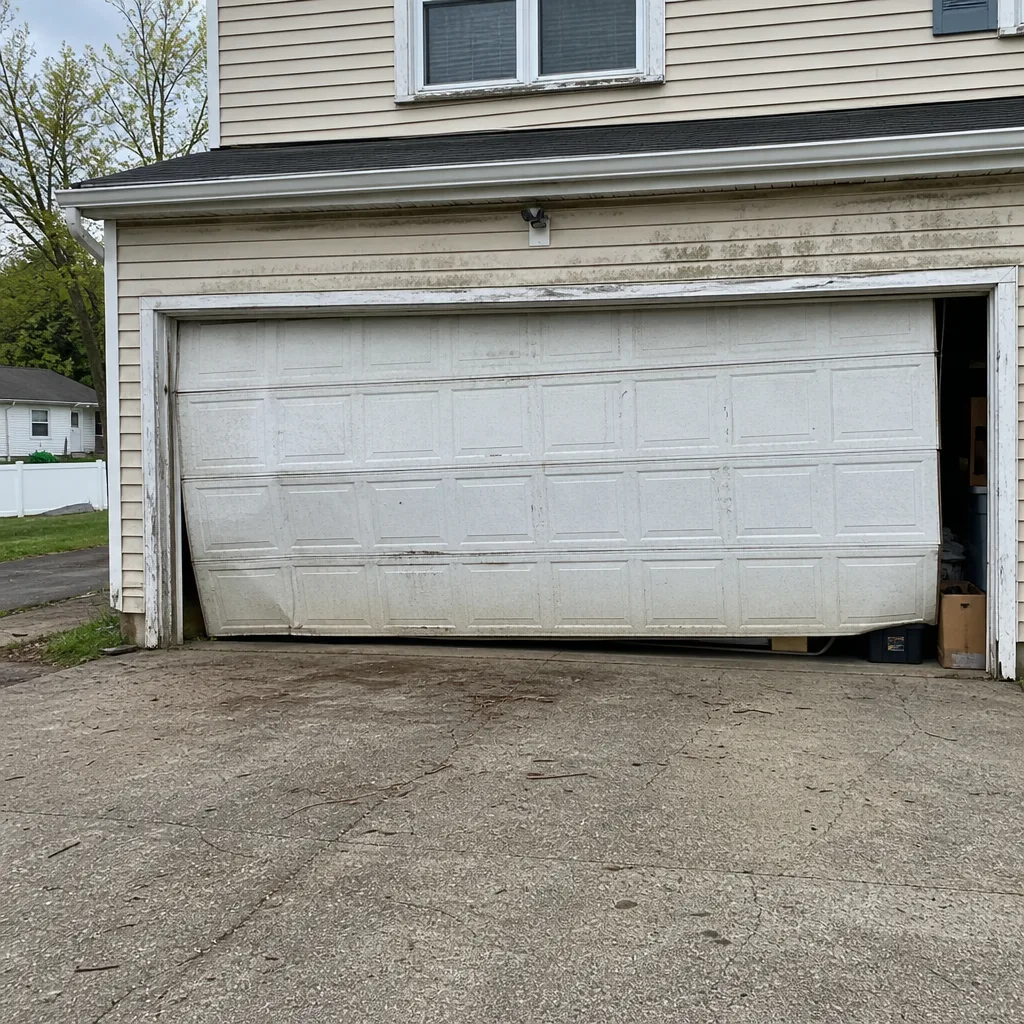 Before
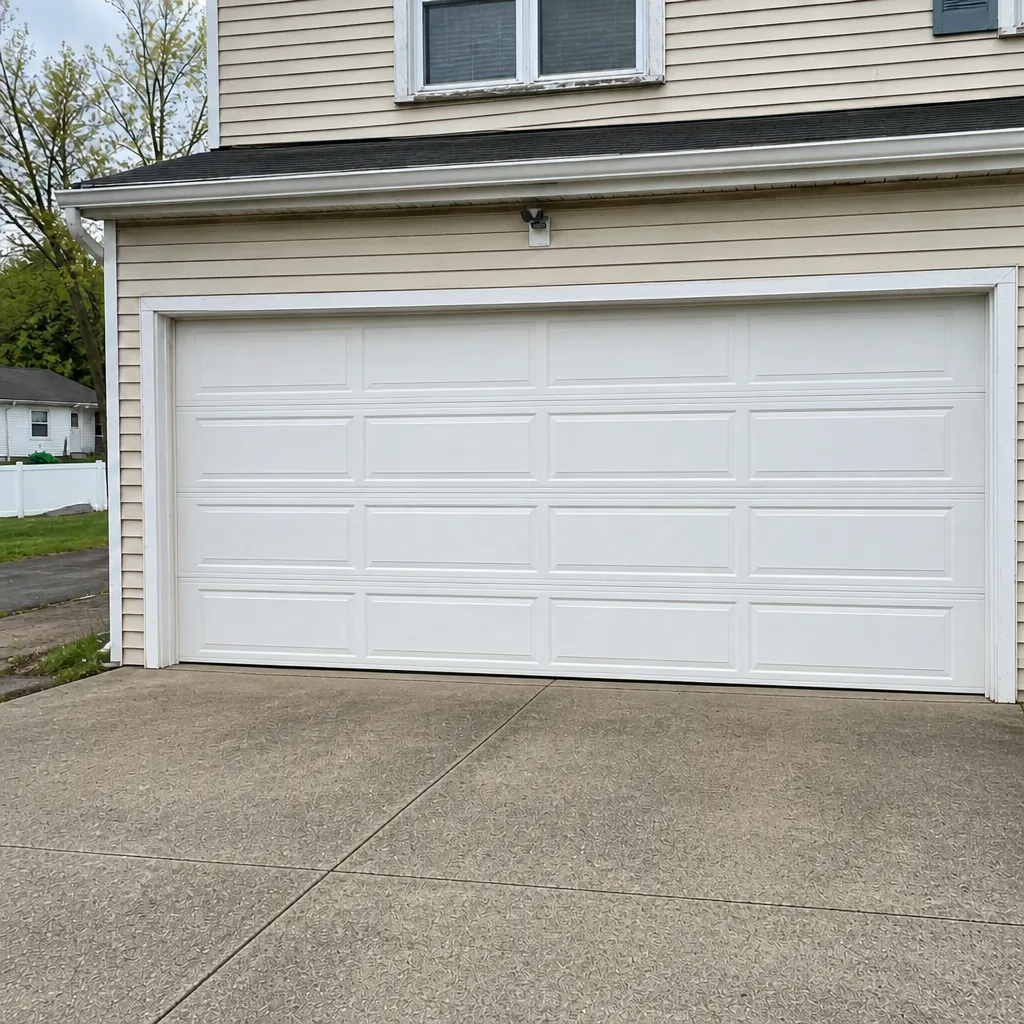 After
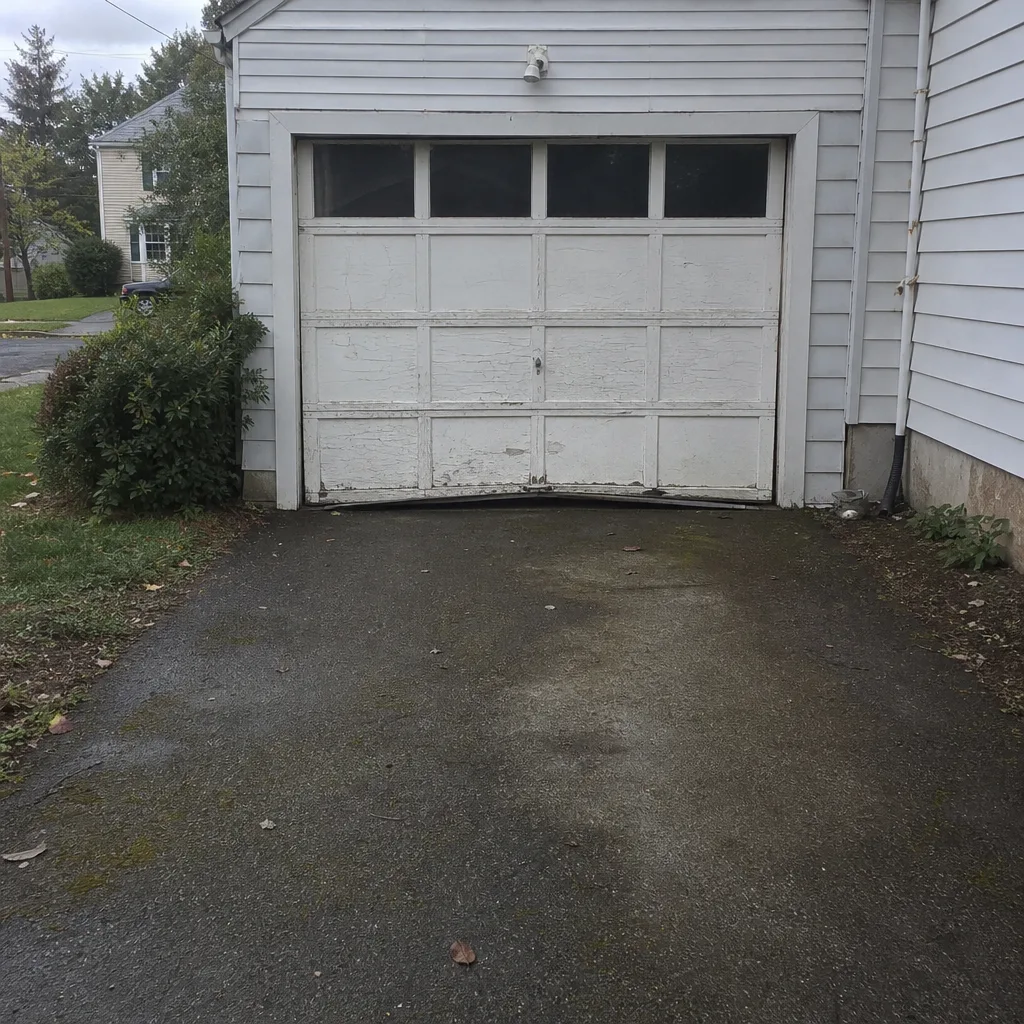 Before
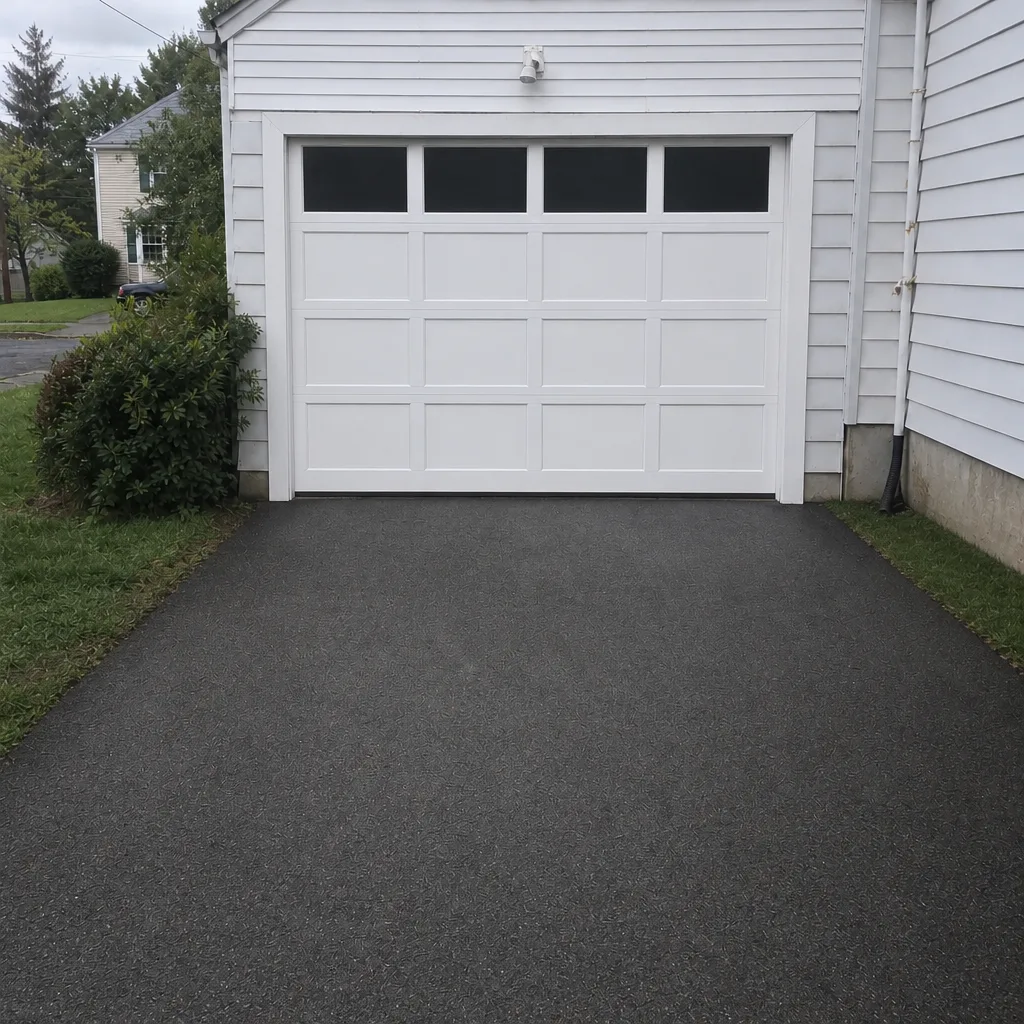 After
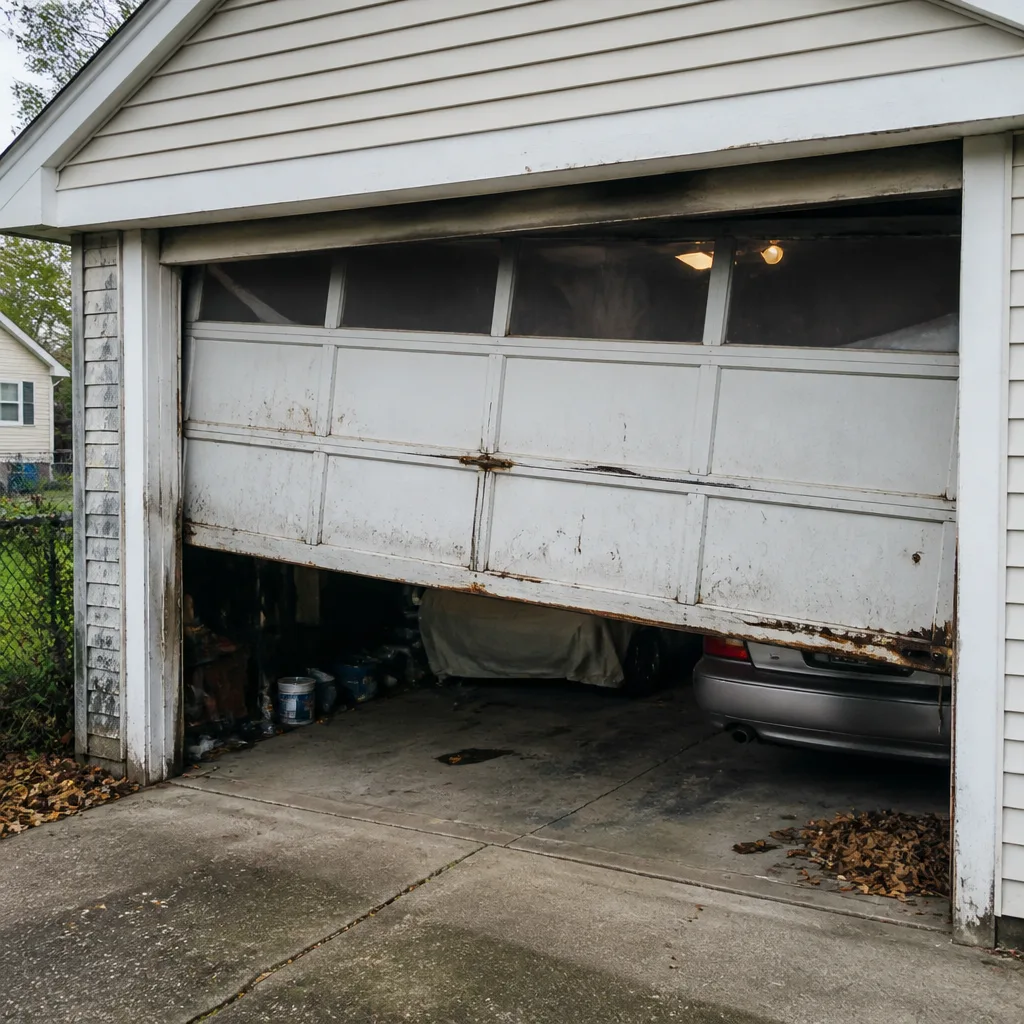 Before
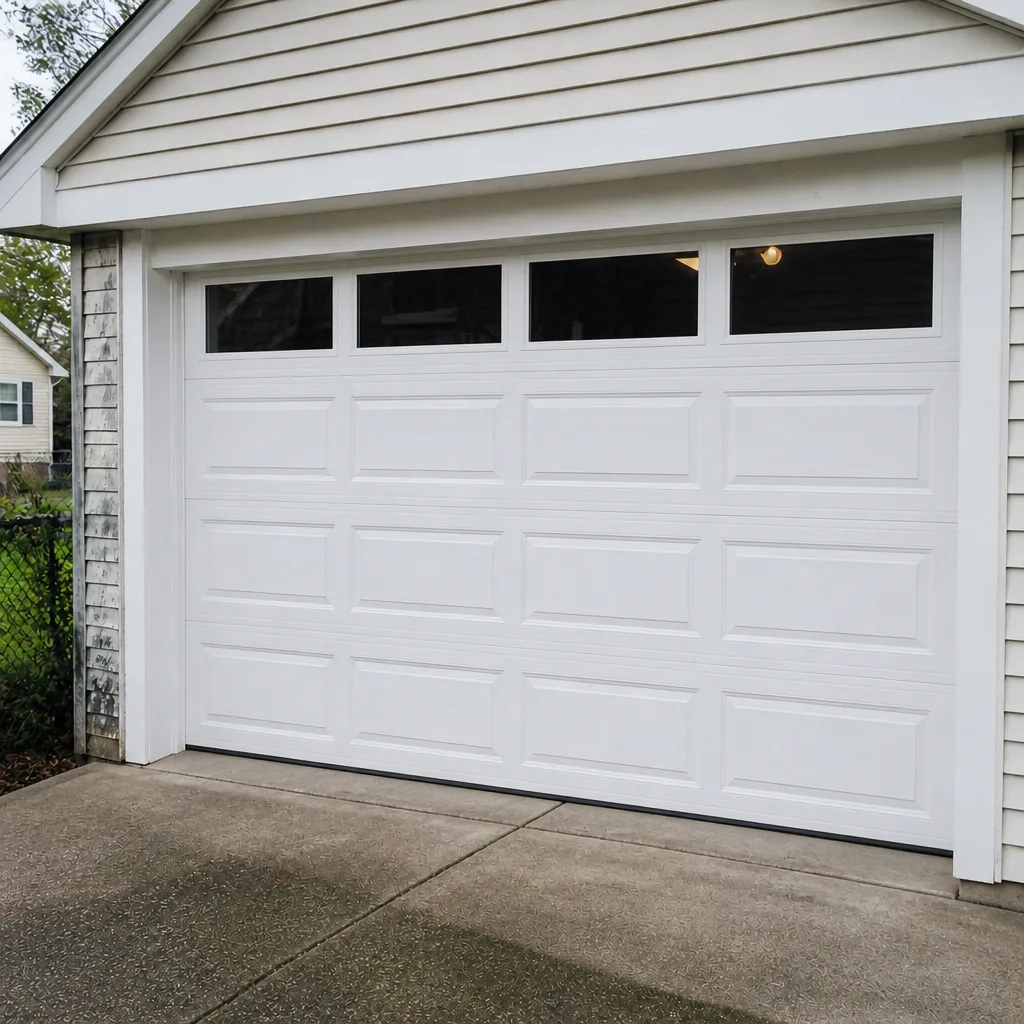 After