Last updated November 21, 2026
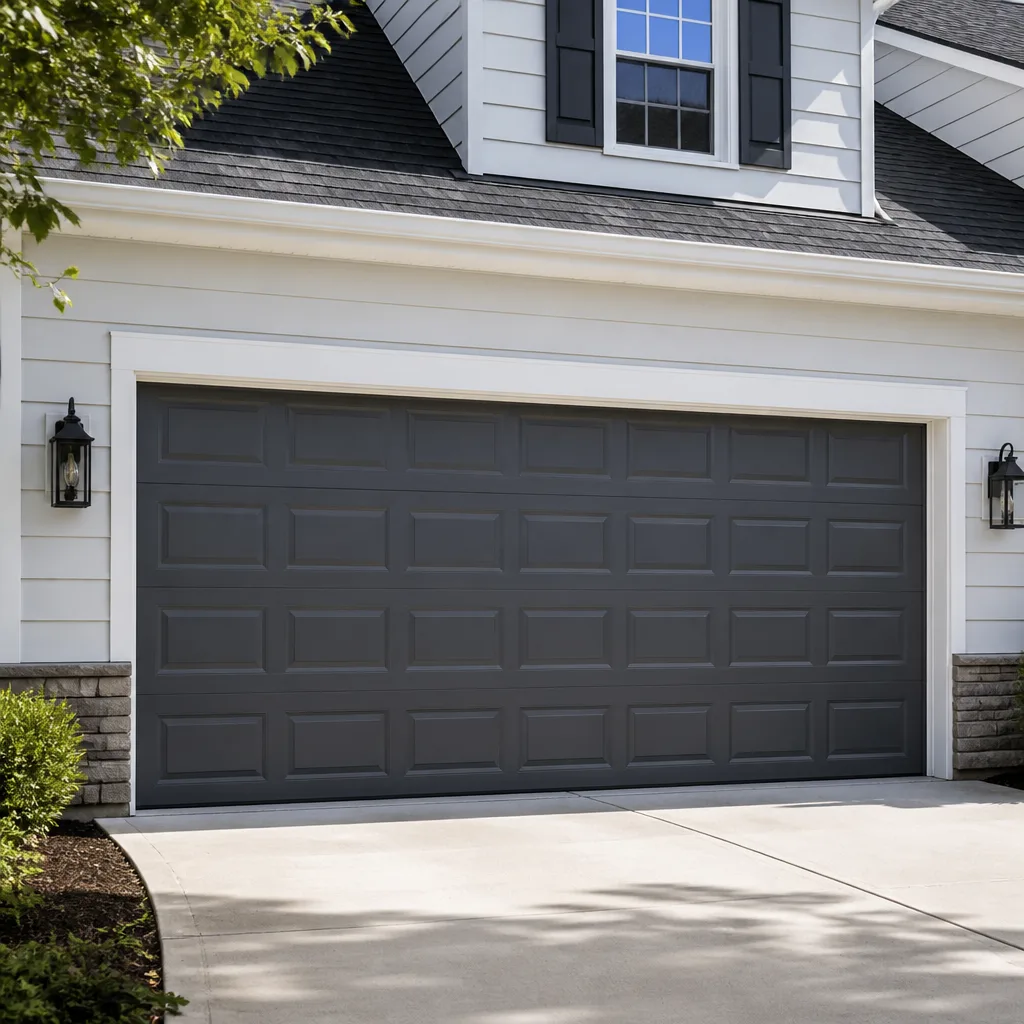 Raised-panel steel
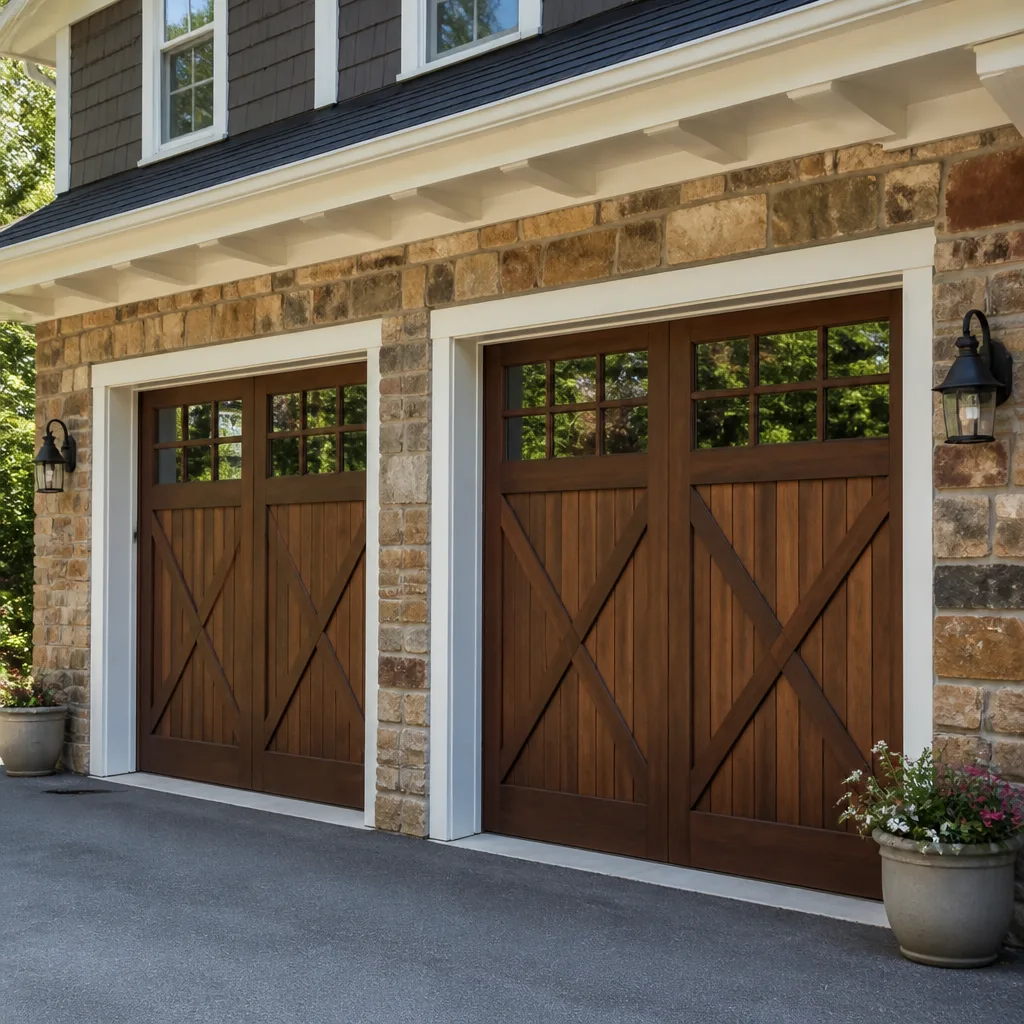 Carriage house
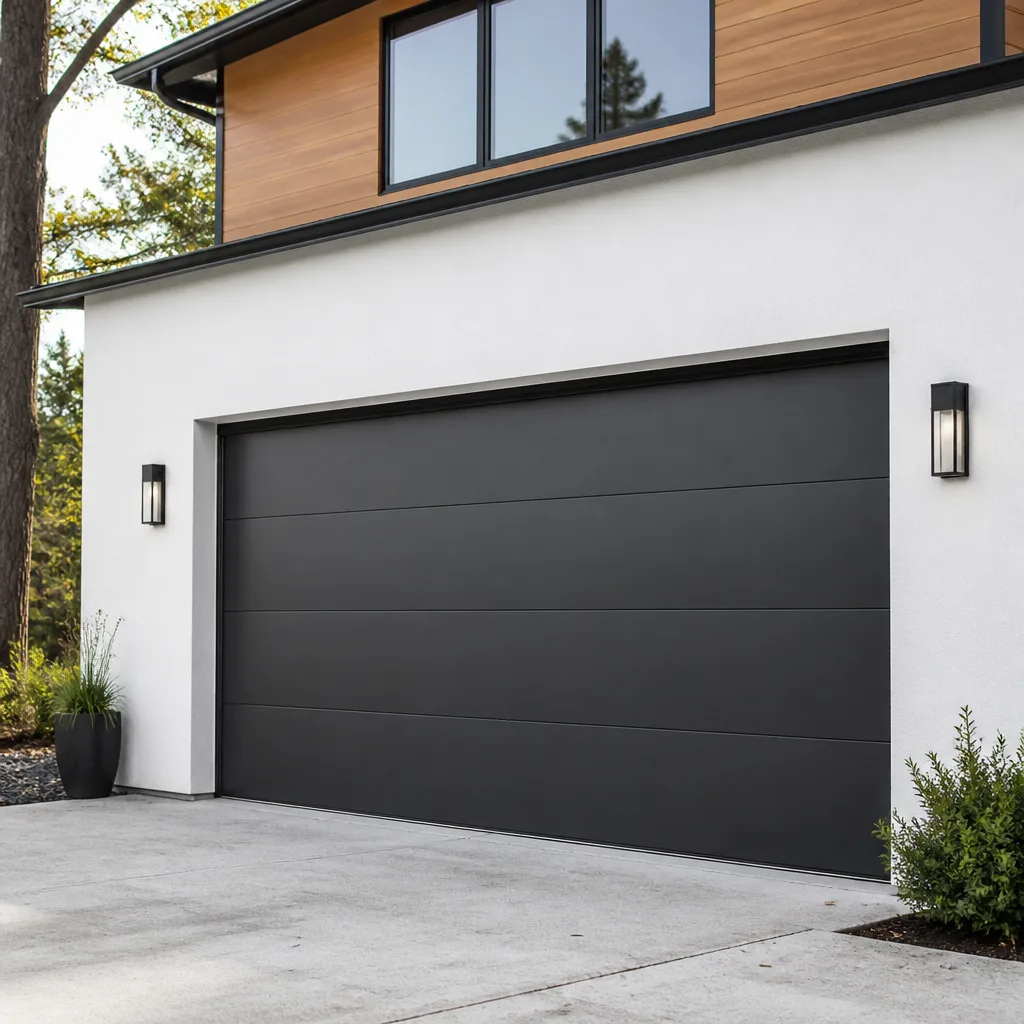 Modern flush
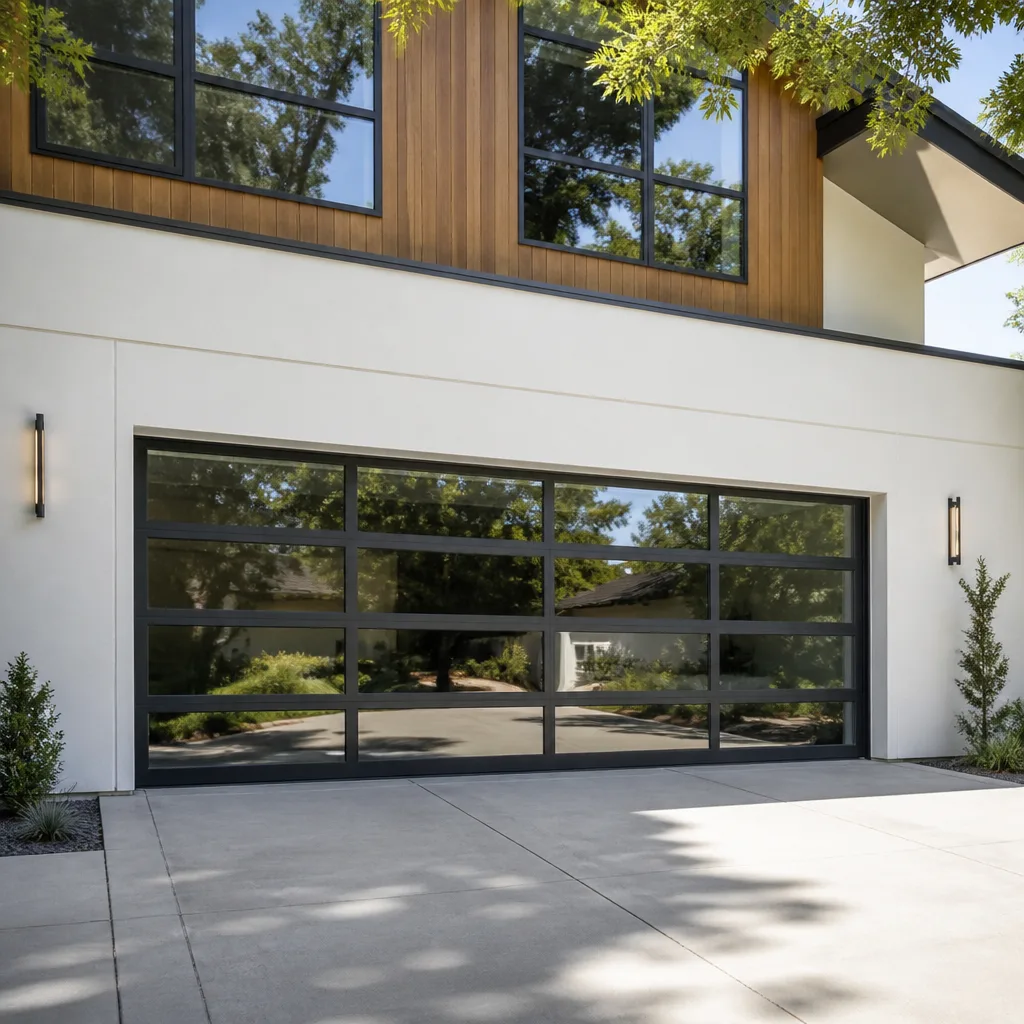 Full-view glass
 LiftMaster openers
 Chamberlain openers
Full 25-point door and opener safety check with every visit - springs, cables, rollers, tracks, and your LiftMaster or Chamberlain opener included
You get a price before we start. It does not change when the pro arrives.
Get your free estimateThe Complete Guide to Garage Doors in New Britain
Most homeowners in New Britain treat their garage door an afterthought until the morning it won’t open. That’s backwards. A garage door is a mechanical system, and it fails for predictable reasons. The city’s housing stock skews heavily toward mid-century construction, so plenty of homes are still running hardware sized and installed for a single-car, low-cycle-count era. That mismatch quietly drives a big share of the calls we get. This guide covers how New Britain’s older homes affect sizing and opener compatibility, which door materials hold up to Connecticut’s freeze-thaw cycles, when a repair makes more sense than a replacement, when a permit is involved, and which brands have real service depth in Central CT.
Quick Answer
In New Britain, a garage door decision almost always comes down to three local variables: the age of the opening (1940s to 1970s construction usually means a nonstandard size or tight header clearance), the weather (freeze-thaw cycles punish wood and unsealed steel), and whether the problem is one component or the whole system. Most spring and opener problems are repaired, not replaced. A door that’s warped, rusted through, or out of proportion to the opening is usually a replacement. Anything involving torsion springs or extension springs should go to a trained garage door specialist, not a general handyman.
Styles & brands we work with
- Raised-panel steel
- Carriage house
- Modern flush
- Full-view glass
- LiftMaster openers
- Chamberlain openers
Table of Contents
- How New Britain’s Older Housing Stock Affects Your Door
- Which Door Type Makes Sense in Connecticut’s Climate
- Repair or Replace? Clear Criteria
- Permits and Code: What New Britain Requires
- Brand Availability and Service Depth in Central CT
- Openers: What Old Construction Gets Wrong
- A Maintenance Routine That Fits This Climate
- What Garage Door Work Costs in New Britain
How New Britain’s Older Housing Stock Affects Your Door
New Britain grew fast in the middle of the last century, and a lot of that housing is still standing with original or first-replacement garage openings. That matters more than most homeowners realize. Door size, header clearance, and opener compatibility all trace back to how the house was framed, and mid-century framing was not built with today’s heavier insulated doors in mind.
Here’s what we run into most in New Britain:
- Nonstandard widths. Older single-car openings don’t always match today’s stock sizes. A door that’s an inch or two off means a custom or trimmed panel, and that affects lead time.
- Tight header clearance. Low headroom above the opening limits which torsion setups and openers will fit. Some homes need a low-headroom conversion rather than a standard install.
- Lightweight original doors. Many mid-century doors were built light because they were opened by hand. Pair one with a modern opener and the spring balance is often wrong for the new motor.
- Weakened framing. Decades of vibration and moisture can loosen the jamb and header. A new door hung on tired framing will sag and bind.
- Outdated openers. Older chain-drive units with no safety reverse are common in these homes, and they don’t meet current safety expectations.
None of this means old homes are a problem. It means the measurement and assessment step matters more in New Britain than in a subdivision built last year. A door that fits right and balances right will outlast three that were forced into an opening they didn’t match.
When something does fail, garage door repair starts with looking at the opening, not just the broken part.
Which Door Type Makes Sense in Connecticut’s Climate
Connecticut’s freeze-thaw cycles are the real test for a garage door. Water gets into seams and joints, freezes, expands, and works the material loose over a winter. Repeat that a few seasons and the wrong door shows its age fast. The right door type depends on how much you use the garage and whether it’s attached to living space.
Steel
Steel is the most common choice in New Britain, and for good reason. It’s strong for its weight, holds paint well, and handles temperature swings without warping. The catch is the bottom edge. Road splash and meltwater sit there, so an unsealed or poorly finished steel door rusts from the bottom up. Insulated steel is worth the upgrade on any attached garage, because it holds warmth in winter and keeps the space usable.
Wood composite
Wood composite gives you the look of a carriage-house door without the maintenance of real wood. It resists moisture better than solid wood and won’t swell and stick the way a wood door can through a wet spring. It costs more than basic steel. On a home where curb appeal matters, it’s a reasonable middle ground.
Insulated panels
Insulation is the decision most homeowners skip and later regret. An insulated door on an attached garage keeps the room above or beside it warmer, cuts noise, and stiffens the panels so the door runs quieter and lasts longer. In a climate where the garage is often the buffer between the house and the cold, insulation earns its cost back in comfort.
The practical answer for most New Britain homes: insulated steel for attached garages, wood composite where appearance leads, and uninsulated steel only for a detached, unheated garage where the door is purely a barrier.
Repair or Replace? Clear Criteria
The repair-versus-replace question is where a lot of money gets spent in the wrong direction. In our experience, the decision gets easier once you separate the components from the door itself. Openers, springs, rollers, cables, and hinges are all replaceable parts. The door panel and the track are the system’s structural core.
Repair when:
- The door itself is straight and sound, and one part failed (a spring, an opener, a roller).
- The door is less than roughly half its expected service life and shows no structural damage.
- The track is aligned and the panels are intact. A single damaged panel can often be swapped.
- The opener still has life and the problem is a component, not the motor.
Replace when:
- The door has rusted through, warped, or delaminated across multiple panels.
- The springs have broken more than once in a short span, a sign the door’s weight and balance are off.
- You’re paying for repairs faster than you’d pay for a new door.
- The door is unsafe: no working safety reverse, a bent track, or a door that won’t stay up.
- You want insulation or a modern safety feature the current door can’t accommodate.
A good diagnostic separates these cleanly. Replacing a healthy door to fix a broken spring wastes money. Repairing a door that’s sagging and out of balance just delays the replacement, because the underlying problem comes back.
For the high-stakes spring side of this, see our guide to garage door spring repair.
Permits and Code: What New Britain Requires
Permit requirements confuse a lot of homeowners, so here’s the plain version: a simple repair, like swapping a spring, roller, or opener, typically doesn’t need a permit. A full door replacement or a new installation often does, because it involves the structural opening and, in some cases, the framing around it. Rules vary by project and change over time, so the reliable move is always to ask the city’s building department before work starts. They’ll tell you exactly what your project needs.
How the permit question usually breaks down:
- Component repair (springs, opener, rollers, hinges, cables): usually no permit.
- Single panel replacement on an existing door: often no permit, but confirm with the city.
- Full door replacement in the same opening: frequently requires a permit.
- New opening or enlarging an existing one: almost always requires a permit and inspection, since it’s structural.
There’s a safety layer underneath all this that no permit replaces. Current doors are expected to have safety features like a working auto-reverse and, on openers, a photo-eye safety sensor. If your door predates those features, an upgrade is worth considering even where no permit is required. A quick call to the New Britain building department settles the permit question for your specific address, and it’s the answer that actually counts.
Brand Availability and Service Depth in Central CT
Garage door brands are not interchangeable when it comes to service. The parts, the opener logic, and the repair approach differ, and a technician who knows your brand gets to the fix faster than one who’s diagnosing from scratch. That’s the practical case for a specialist over a generalist. Around New Britain and Central CT, a handful of brands come up again and again.
On the door side, Clopay and Amarr are widely installed and well supported, with good parts availability for both repairs and full replacements. Wayne Dalton shows up often on older homes, and knowing its hardware makes a difference when a door needs a component rather than a whole replacement. On the opener side, Genie is common in this market, and its units have specific quirks around travel limits and safety sensors that a specialist recognizes quickly.
Service depth matters most with springs. Torsion and extension springs operate under extreme tension. Generalists often decline that work or hand it off, because it’s genuinely dangerous and needs the right tools and know-how. A specialist who does this every day can diagnose a broken spring, match the correct replacement, and rebalance the door safely. That’s a different job from the one a handyman takes on.
The brands we handle include LiftMaster, Chamberlain, Genie, Clopay, Amarr, Wayne Dalton, Craftsman, and Raynor. If your equipment carries one of those names, we’re already familiar with the hardware before we arrive.
Openers: What Old Construction Gets Wrong
Openers are where old construction meets modern expectations, and the collision is usually about three things: headroom, door weight, and safety features. A mid-century opener and a mid-century door were designed together. Swap one without the other and the balance goes off.
The usual mismatches:
- Motor sized for a lighter door. Install a modern opener on an old lightweight door without adjusting the springs and the motor fights the door every cycle, wearing both out.
- Missing safety reverse. Older openers may lack the auto-reverse and photo-eye safety sensor that current units have. That’s a safety gap worth closing.
- Headroom and rail fit. A low-ceiling garage may not take a standard rail. Some homes need a different mount or a low-profile setup.
- Chain noise in an attached garage. A noisy chain-drive under a bedroom is a common complaint in these homes. Belt-drive units run quieter.
When an opener starts failing, it’s worth checking whether the opener is the problem or the door is. An opener that strains, reverses for no reason, or stops halfway is sometimes reporting a door that’s out of balance, not a motor that’s dying. Get that diagnosis right and you avoid replacing a healthy opener. Our garage door opener repair covers both sides of that question.
A Maintenance Routine That Fits This Climate
A little upkeep goes a long way in Connecticut, where a door sees real heat in summer and hard freezes in winter. The goal isn’t to turn you into a technician. It’s to catch small problems before they become spring failures or full replacements.
What to do each season:
- Check the balance. Disconnect the opener and lift the door halfway by hand. It should hold there. If it drops or needs a shove, the springs need attention.
- Test the safety reverse. Put an object in the door’s path and confirm it reverses. If it doesn’t, that’s a safety issue to fix right away.
- Lubricate moving parts. Rollers, hinges, and tracks benefit from a proper garage door lubricant. Skip the tracks themselves on most setups and never grease the springs.
- Clear the bottom seal. In winter, clear snow and ice from the base. Meltwater sitting against the bottom edge is the number one cause of rust.
- Look at the weatherstripping. Cracked seals let in cold, water, and pests. Replacing the bottom seal is inexpensive and protects the door.
- Listen. A door that rattles, grinds, or bangs is telling you something loosened. Deal with noise early.
Two things you should not do yourself: adjust the springs or re-tension the cables. Those carry stored energy that can release violently. Leave spring and cable work to a trained professional every time.
What Garage Door Work Costs in New Britain
Homeowners ask about cost first, so here’s an honest framing. Garage door pricing in New Britain depends on the part, the door, and the opening, and the only number that counts is the written estimate you get before any work starts. Below is how the work typically breaks down by component.
- Spring replacement (one spring): priced per spring, and a matched pair is usually replaced together, so a pair runs about twice the single-spring figure.
- Opener repair or replacement: depends on whether it’s a component fix or a new unit, and on the opener type.
- Panel or section replacement: priced by the section and its availability for your door’s make and model.
- Full door replacement: varies widely with material (steel, wood composite, insulated) and whether the door is a stock or custom size.
- New installation: includes measurement, the door, and any necessary track or opener work.
The price you’re quoted is agreed before the work begins, so there are no surprises when the job is done. On replacement and installation, the process starts with a free measure and a written price rather than a same-day promise, because doors are measured, ordered, and scheduled. On a repair, speed matters more, and we’ll tell you what’s realistic for your job.
For the full span from a stuck opener to a new door, New Britain Garage Door Repair Pros covers diagnosis, repair, and installation in one place.
Common Mistakes to Avoid
- Hiring a generalist for spring work. Springs store enormous energy and a mistake can cause serious injury. Use a garage door specialist, not a handyman adding a side job.
- Replacing the opener when the door is the problem. A straining opener often signals an out-of-balance door. Diagnose the door first.
- Forcing an oversized door into a low-clearance opening. In mid-century New Britain homes, tight header clearance is common. Measure the headroom before you buy a door.
- Skipping the permit check. A full replacement often needs a permit. Call the city’s building department before work starts so you don’t run into trouble later.
- Ignoring the bottom seal. Leaving meltwater against the door’s base is the quickest way to rust a steel door. Clear snow and ice each winter.
- Choosing an uninsulated door for an attached garage. On a home where the garage borders living space, insulation is the upgrade that keeps paying off in comfort.
See the difference
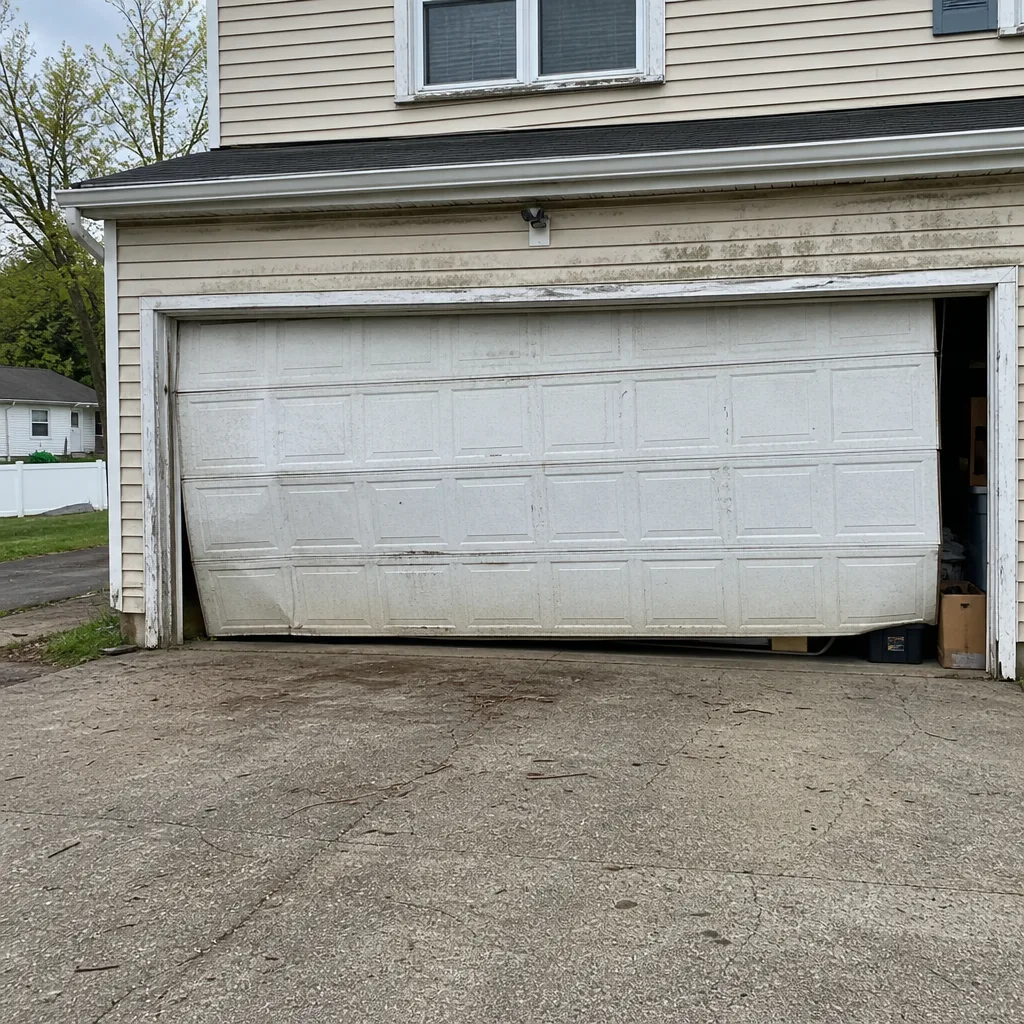 Before
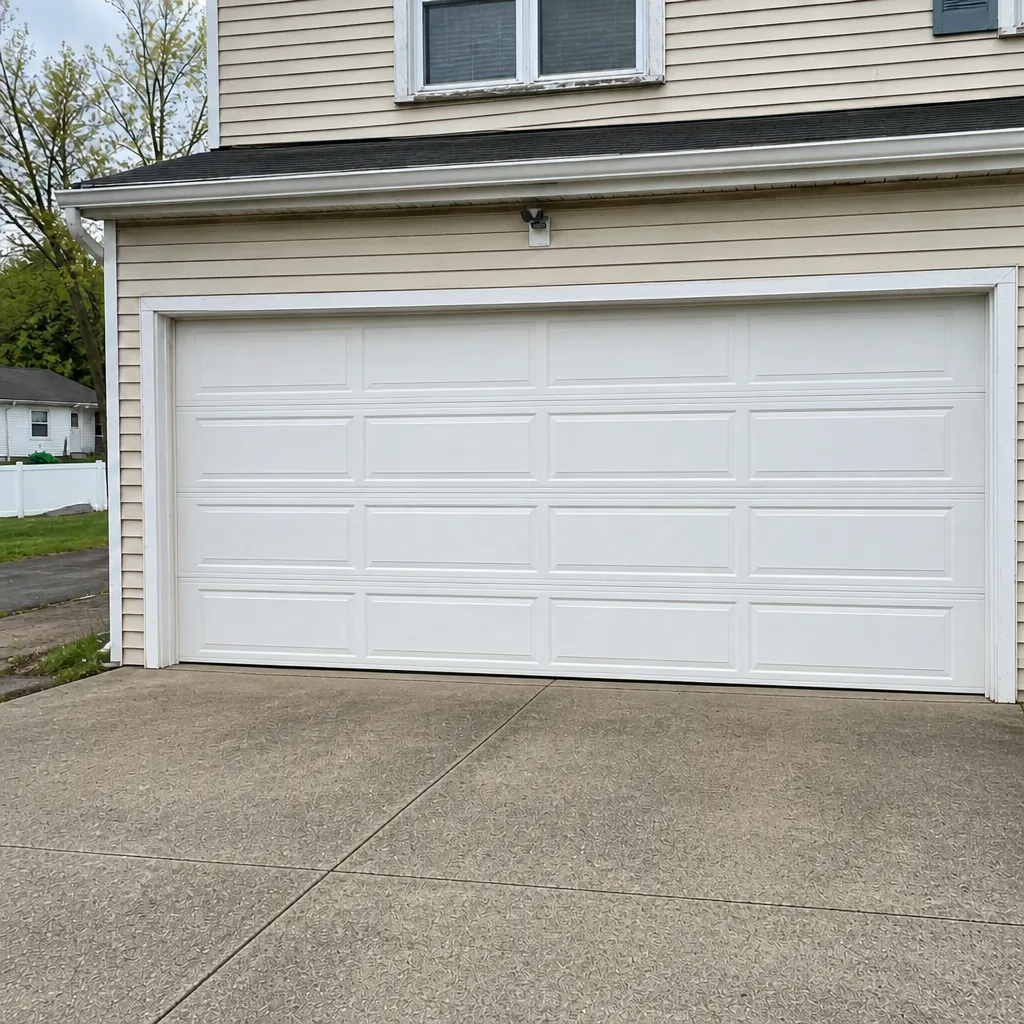 After
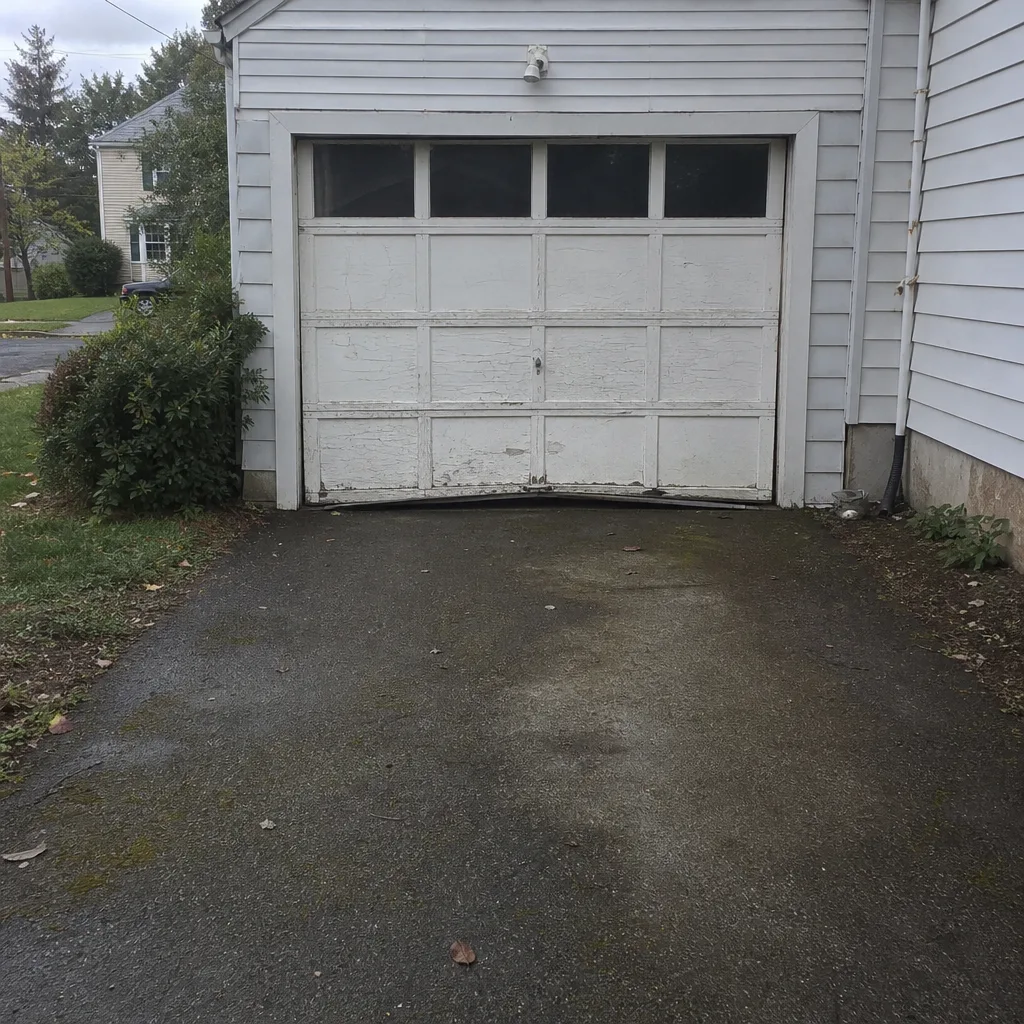 Before
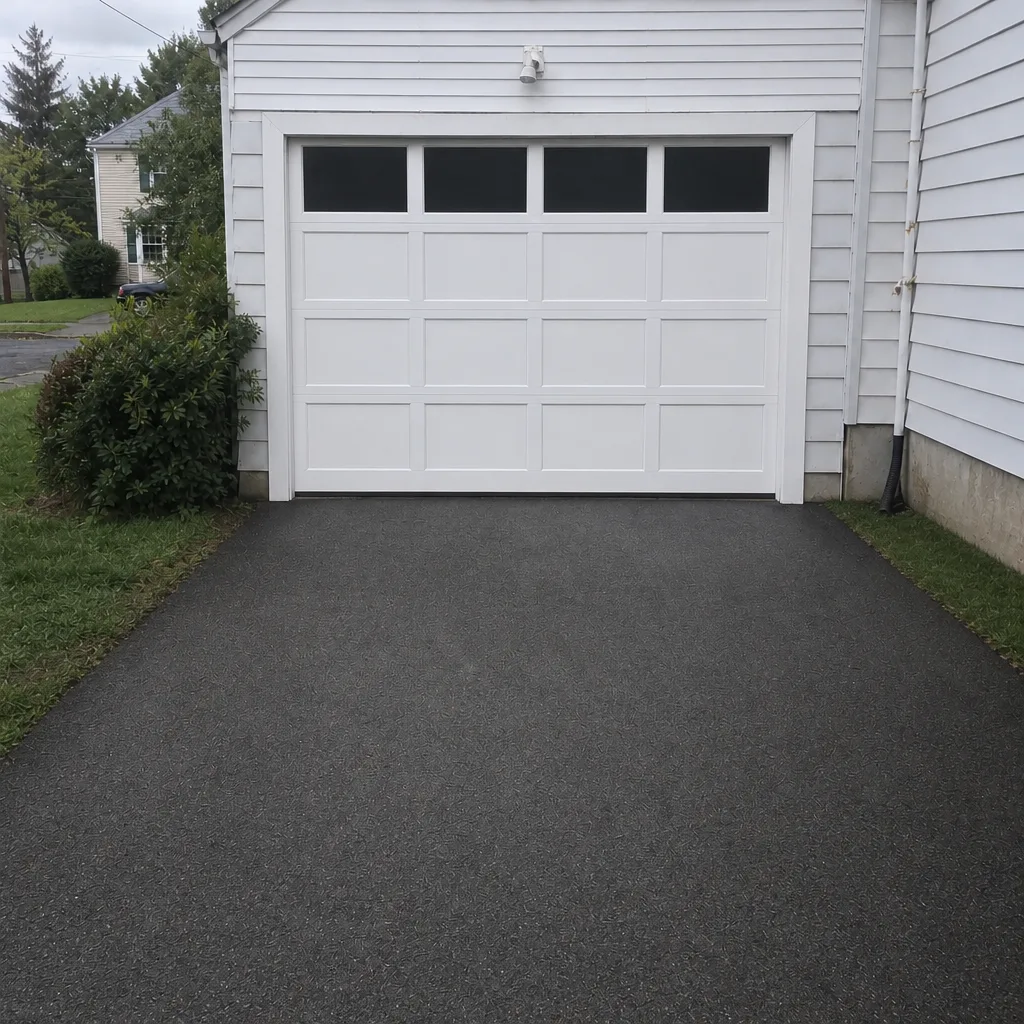 After
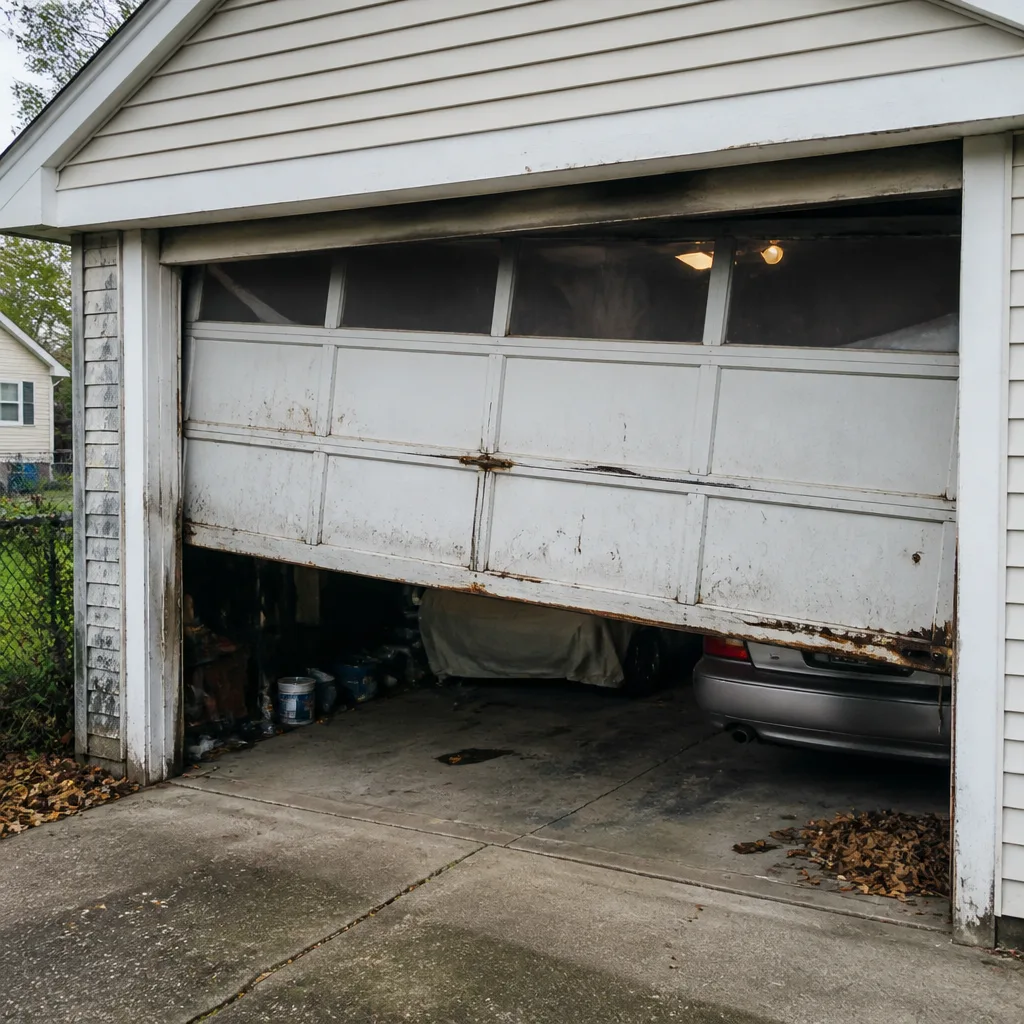 Before
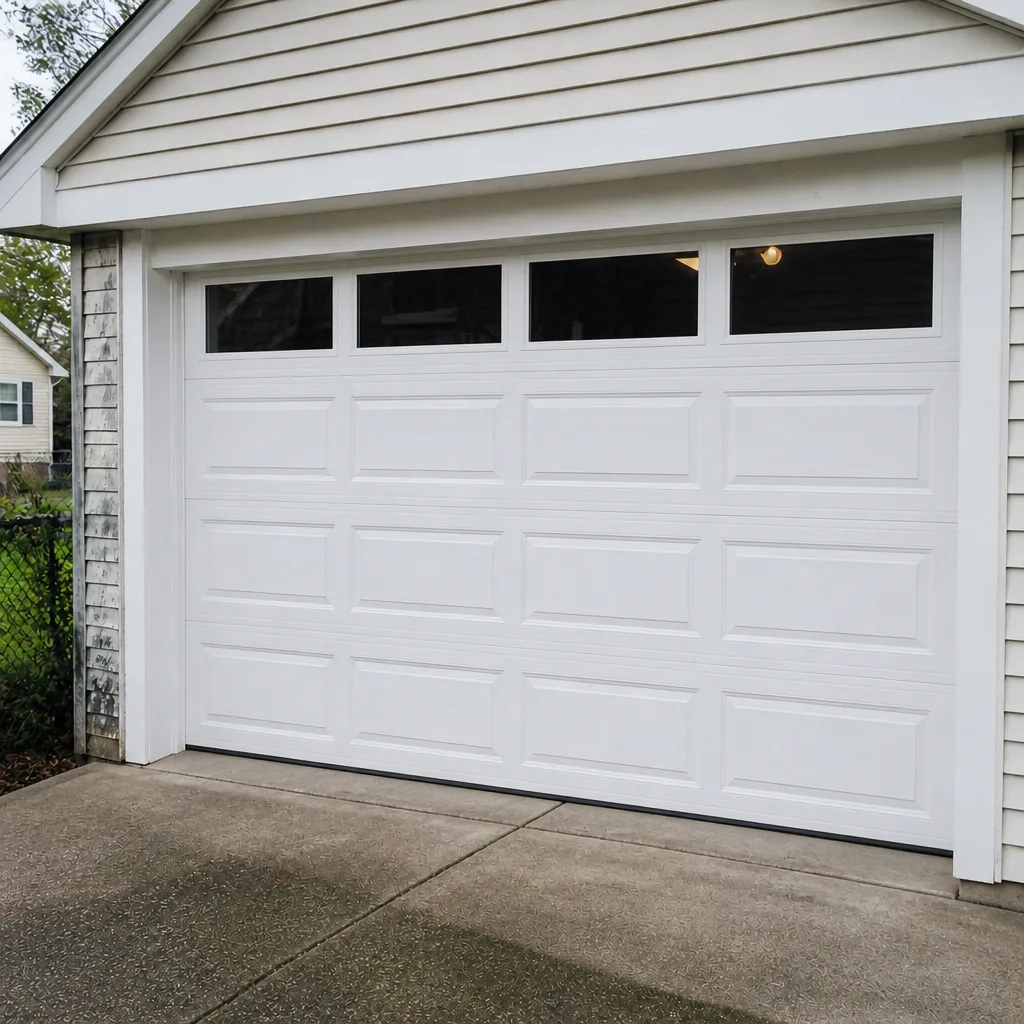 After
When to Call a Professional
Some jobs are clearly a specialist’s. A broken spring, a door that won’t stay up, snapped cables, a bent track, or an opener that reverses for no reason all point to a trained technician. The same goes for a door that’s stuck open and leaves the house exposed, or a vehicle trapped behind a door that won’t budge. Those are the calls that need speed and know-how, not a guess. If you’re unsure whether it’s the door or the opener, a proper diagnosis settles it before anyone replaces the wrong part. New Britain Garage Door Repair Pros offers free estimates in New Britain. Call (855) 959-3390.
Frequently Asked Questions
Repair cost in New Britain depends on the part and the opener type, and you get a written estimate before any work starts. Spring replacement is priced per spring, with a matched pair running about twice a single. Call (855) 959-3390 for an exact quote; estimates are free.
For many repairs, yes. Emergency and repair work is a core part of what we do, so a door that’s blocking a vehicle or leaving the house open gets priority. Call (855) 959-3390 and we’ll give you a straight answer on timing for your job.
A full door replacement often requires a permit, while a simple spring or opener repair usually doesn’t. Because the rules depend on the exact project, call the city’s building department to confirm what your address needs before work begins.
No. The price is quoted and agreed before any work starts, and the written estimate sets the final price. If we find something that changes the scope, we tell you first rather than adding it to the invoice after the fact.
The local professionals we connect you with are licensed and insured as the state requires. Our technicians have up to 13 years of experience, and we handle springs, openers, cables, and full installations rather than passing you to another contractor.
We work on LiftMaster, Chamberlain, Genie, Clopay, Amarr, Wayne Dalton, Craftsman, and Raynor. If your door or opener carries one of those names, we’re familiar with the hardware. Call (855) 959-3390 to talk through your equipment.
The Bottom Line
A garage door is a mechanical system, and in New Britain the local variables shape every decision. Mid-century housing means careful measurement for size and headroom. Freeze-thaw cycles mean moisture control and the right material, with insulation paying off on attached garages. Repair usually beats replacement for springs, openers, and single panels, while a warped or rusted door is a replacement. Permits are worth a quick call to the city for full replacements. And for anything involving springs or cables, use a specialist. Free estimates in New Britain: call (855) 959-3390.
Get a Free Estimate in New Britain
Whether you’re weighing a repair against a replacement, chasing a balky opener, or planning a new door for a mid-century opening, we can help you sort it out. Call (855) 959-3390 for a free estimate in New Britain. We’ll diagnose the system, walk you through the options, and give you a written price before any work starts.
Written by the team at New Britain Garage Door Repair Pros.