Last updated November 21, 2026
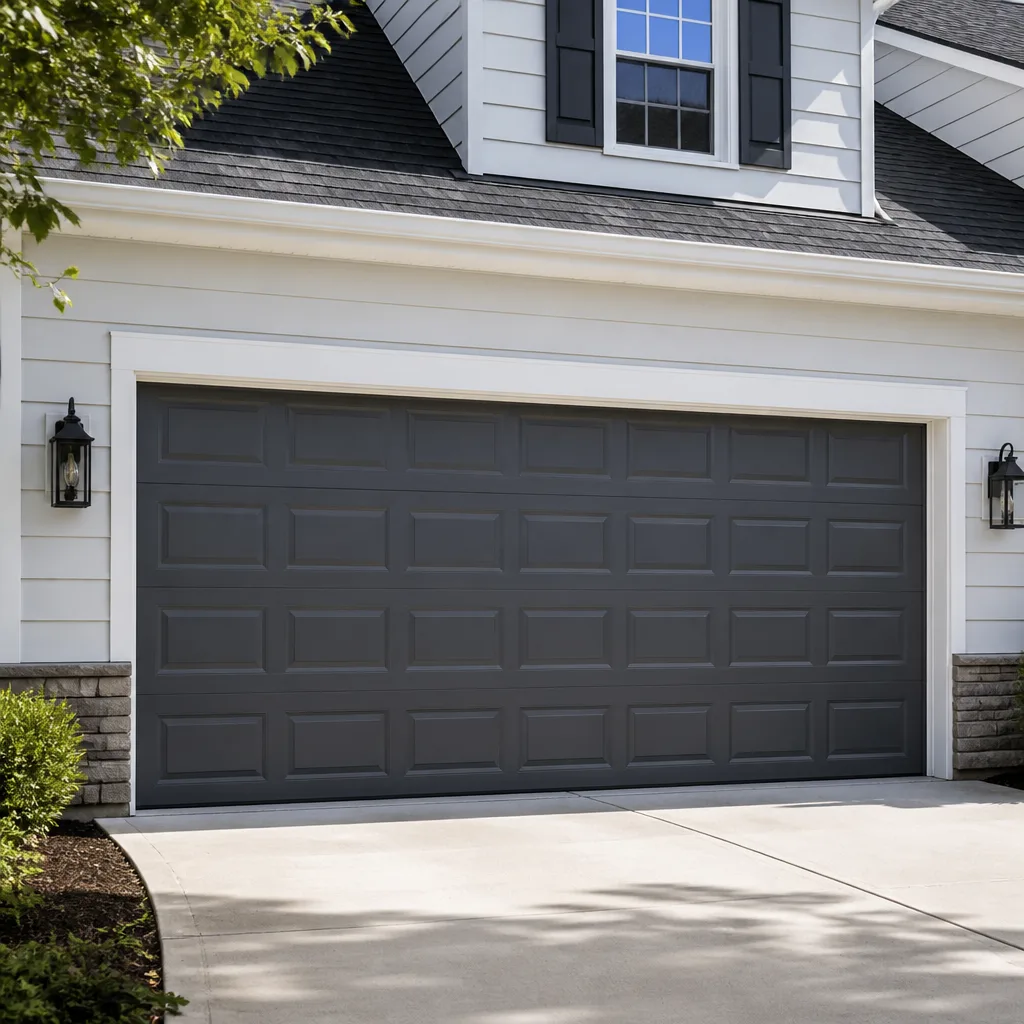 Raised-panel steel
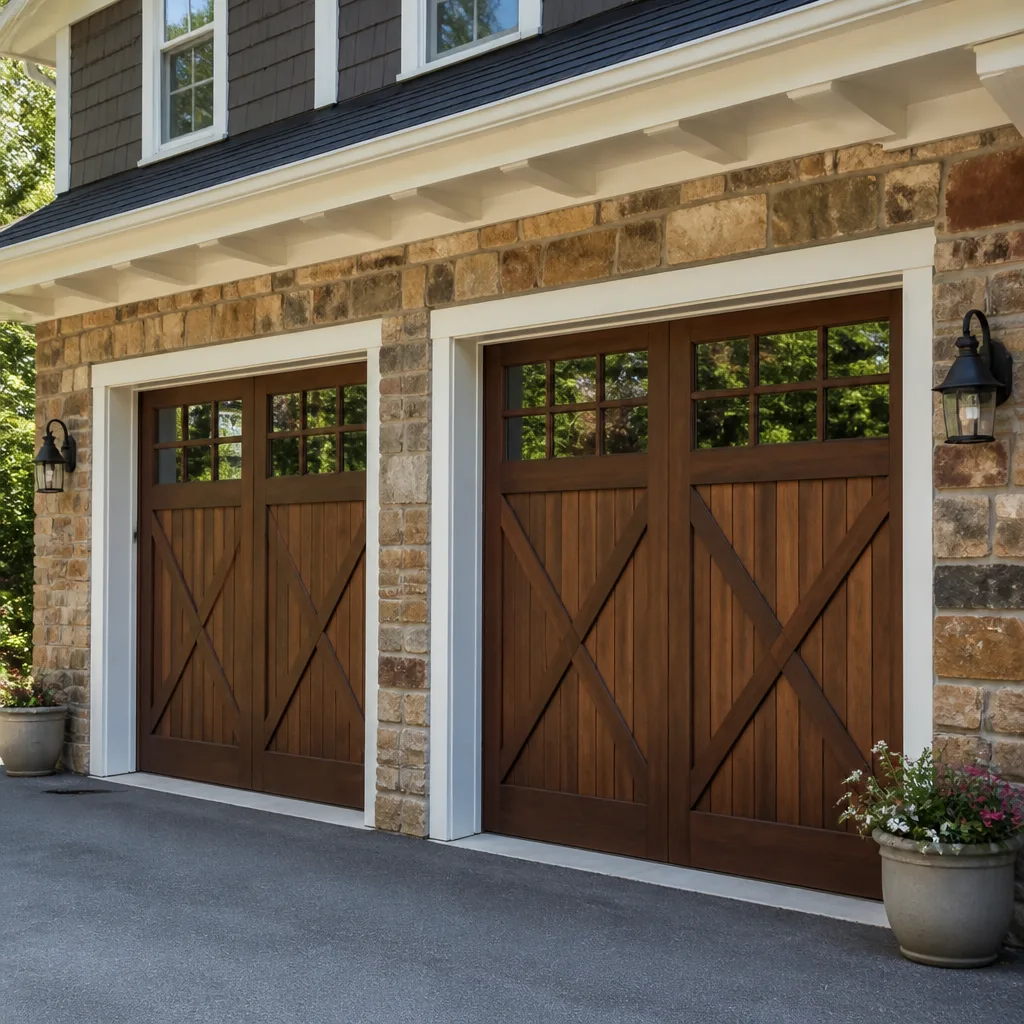 Carriage house
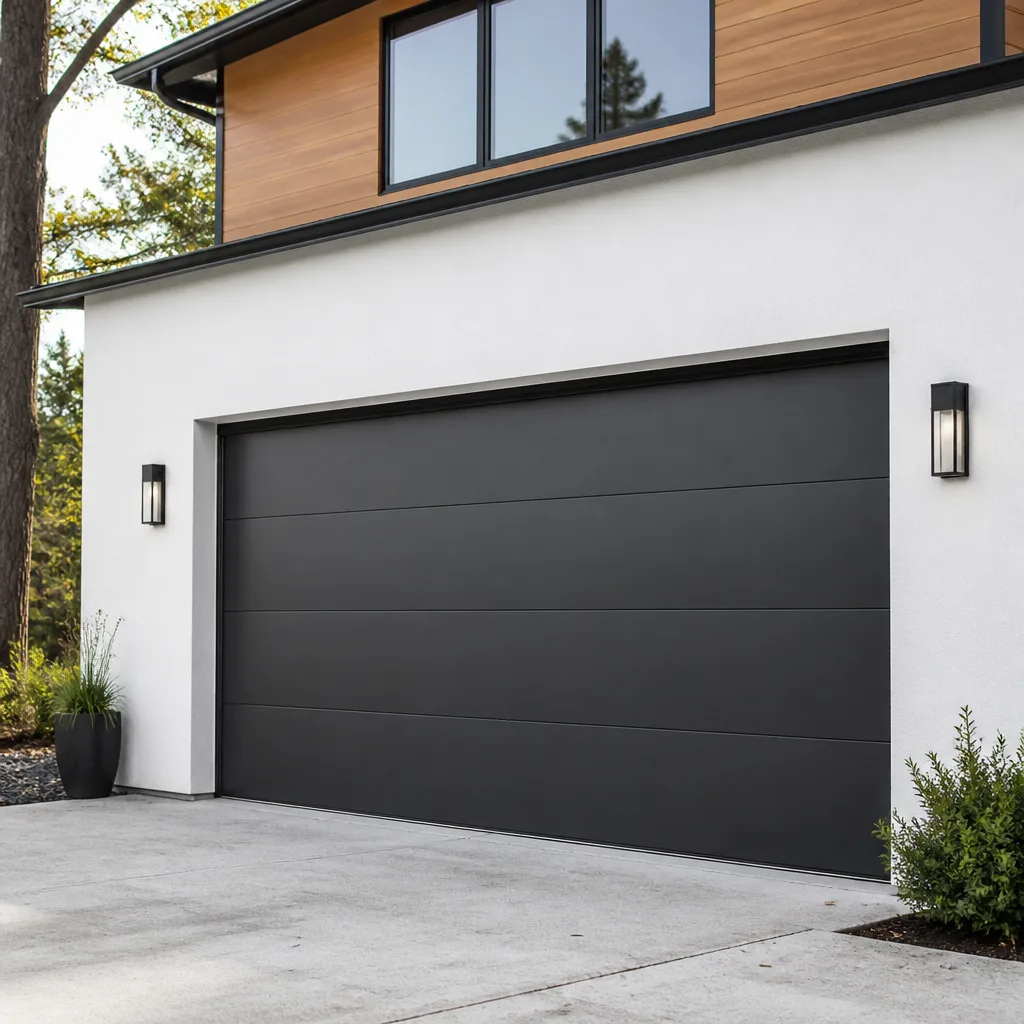 Modern flush
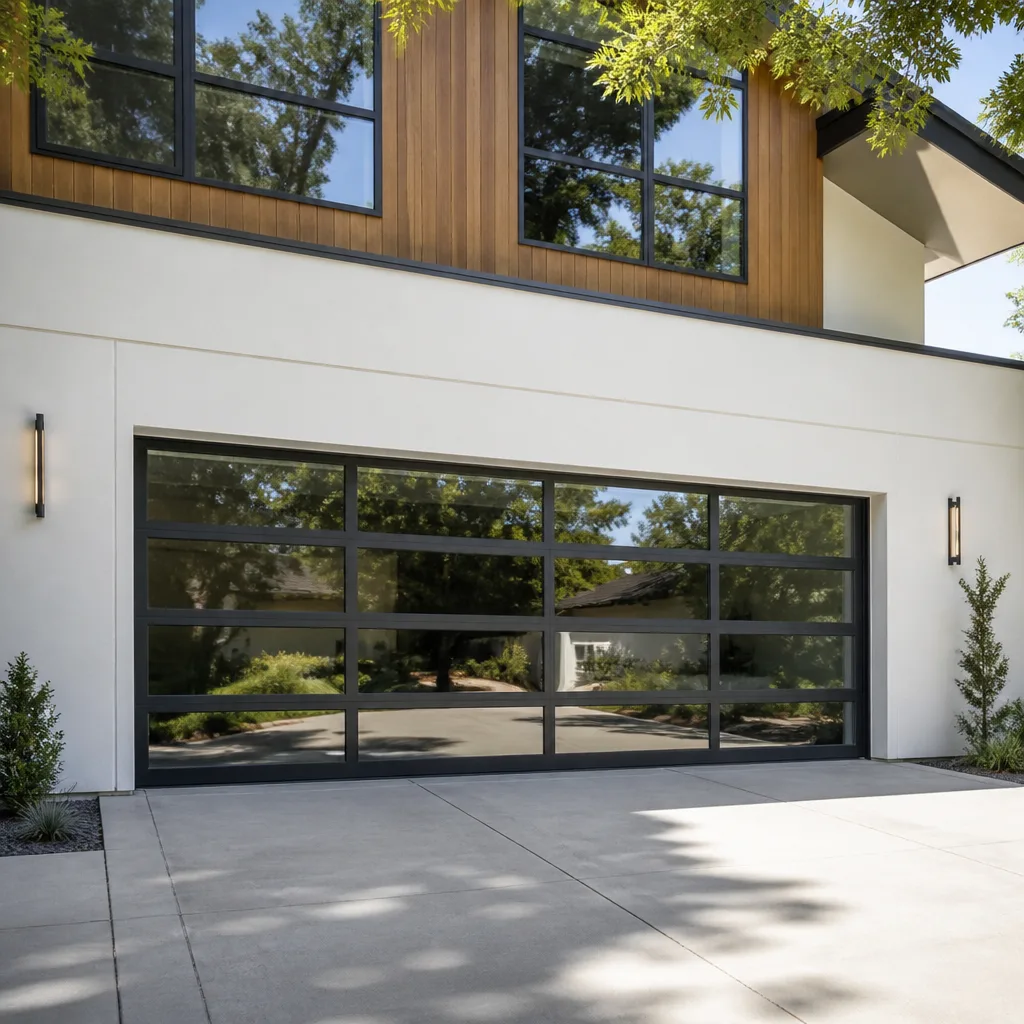 Full-view glass
 LiftMaster openers
 Chamberlain openers
Full 25-point door and opener safety check with every visit - springs, cables, rollers, tracks, and your LiftMaster or Chamberlain opener included
You get a price before we start. It does not change when the pro arrives.
Get your free estimateGarage Door Warning Signs: A New Britain Homeowner’s Reference Guide
A garage door that takes three seconds longer to open than it did last year has already told you something. Most homeowners read that slow operation as a door “getting old” rather than what it usually is: a measurable symptom pointing to spring wear, opener strain, or track misalignment. The same goes for a new rattle, a faint grinding note, or a door that lifts a little crooked. None of these are cosmetic. Each one maps to a specific component with a known window before it fails. This guide walks you through the noise, the visual cues, the operational quirks, and the opener symptoms that matter, and gives you a severity system so you know what to watch and what to stop using today. It’s written for New Britain homeowners who rely on their door every single day.
Quick Answer
The most important garage door warning signs in New Britain are unusual noise (grinding, popping, scraping), visible rust staging or coil gaps on springs, frayed cables, slow or uneven travel, and a door that reverses without an obstruction. Any of these can signal a component close to failure. Springs and cables under tension are the most dangerous, and a door that reverses, hangs unevenly, or makes a loud pop should be treated as a stop-using-now situation and checked by a specialist before it’s operated again.
Styles & brands we work with
- Raised-panel steel
- Carriage house
- Modern flush
- Full-view glass
- LiftMaster openers
- Chamberlain openers
Table of Contents
- What the Noise Is Telling You: A Sound-to-Component Map
- Reading Your Springs and Cables Before They Fail
- Slow Travel, Uneven Lift, and False Reversals
- Opener Warning Signs: Motor Strain and Limit-Switch Drift
- The Three-Tier Severity System: Monitor, Schedule, Stop
- How New Britain Weather Accelerates Wear
- Your Monthly Five-Minute Inspection
- Why Brand Familiarity Shortens the Repair
What the Noise Is Telling You: A Sound-to-Component Map
Noise is the earliest and most reliable warning your door gives you, and it’s also the one homeowners dismiss fastest. In our experience, a door doesn’t suddenly start screaming. It develops a note, quietly, over weeks. The trick is matching the sound to the part. Here’s the taxonomy we use on a diagnostic call.
- Grinding: Usually metal-on-metal contact from dry or worn rollers, a bent track, or a torsion tube that’s shifted. Grinding that worsens as the door rises points toward the track or rollers; grinding at the very start of travel often means the opener is fighting a misaligned rail.
- Popping: A sharp pop, especially from overhead, is a spring symptom. It can be a torsion spring slipping on its winding bar collar or an extension spring catching. A single loud pop followed by a door that won’t lift means the spring has broken. Stop and call.
- Rattling: Loose hinge bolts, a slack chain or belt on the opener, or a panel that’s worked free of its stile. Rattling is usually the least urgent, but a rattling chain on a Craftsman or LiftMaster opener often means the rail needs tensioning before it wears the sprocket.
- Scraping: The door is contacting something it shouldn’t: a track that’s out of plumb, a weather seal dragging, or a panel that’s bowed. Scraping left alone will chew the seal and score the track.
- Squealing: Worn nylon rollers or dry bearings. The fix is usually a roller replacement, but persistent squealing after lubrication points to a roller that’s failed internally.
The reason this matters: each sound narrows the diagnosis before a technician ever arrives, which is part of why a focused garage door repair visit in New Britain can move quickly from symptom to fix. When you call, describe the sound and where it comes from. That one detail shortens the visit.
Reading Your Springs and Cables Before They Fail
Springs and cables are the parts that hurt people, so this section is about reading them, not touching them. Torsion and extension springs operate under extreme tension at all times. A spring that looks fine can still be one cycle from breaking. Do not attempt to adjust, wind, or remove a spring yourself. That’s not a cautious suggestion; it’s the line between a repair and an emergency room visit.
What you can do is look. Here’s what the visual cues actually mean, staged by risk:
- Light surface rust, single stage: A dusting of orange on the coils is early corrosion, common in New Britain’s humid summers. Monitor it. Light rust doesn’t mean failure, but it does mean the spring is aging.
- Flaking rust or pitting: The metal is losing cross-section. A spring with pitted coils is closer to breaking than a clean one. Schedule service and have it checked.
- Visible coil gaps: On a torsion spring, a gap between coils when the door is closed can indicate the spring has stretched or lost tension. On extension springs, a stretched-out, sagging spring is telling you the same thing. This is a schedule-service-and-don’t-ignore-it tier.
- Frayed or kinked cables: A cable with broken strands, a birdcage kink, or a drum that’s winding unevenly is a stop-using-now signal. Frayed cables snap.
- A spring that’s visibly broken (a clean gap in the coil): Stop. Don’t run the opener. Call for spring repair immediately.
One more thing: springs are rated in cycles, not years, and a door that opens and closes ten times a day wears its springs roughly three times faster than one that runs three times a day. If your household is busy, your springs are working harder than the calendar suggests. When a spring does go, matching it to the right replacement matters, which is why our garage door spring repair work starts with identifying the original spring’s wire gauge and inside diameter rather than guessing.
Slow Travel, Uneven Lift, and False Reversals
Operational symptoms are the ones homeowners most often write off as personality. A door that’s a little slow, a little crooked, a little twitchy. But behavior is diagnostic, and here’s what each pattern usually means.
- Slow travel: If the door opens more slowly than it used to, the opener is working harder than it should. That’s usually a balance problem (worn springs no longer carrying the door’s weight), a binding track, or a failing opener motor. It is not “just getting old.”
- Uneven lift: One side rises before the other. This points to a stretched or broken spring on one side, a cable that’s jumped its drum, or a track that’s out of alignment. Uneven lift puts torque on the panels and can crack them.
- Reversal without obstruction: If the door goes down and then pops back up with nothing in its path, the safety sensors or the travel limits are out of adjustment. This one is a security concern as much as a mechanical one, because a door that won’t stay closed is a door that isn’t securing your garage.
- Door won’t stay up: When you disengage the opener (pull the release handle) and the door won’t hold itself open, the springs are doing too little of the lifting. Never walk under a door in that condition. That’s a balance failure and a real safety hazard.
- Jerky or stalling travel: A door that stutters on the way up is binding. Left alone, the opener’s gear or sprocket takes the abuse.
Each of these is a data point, and together they tell a technician which component is the source before the visit starts. If you’re seeing two or more of them together, it’s time to schedule rather than watch.
Opener Warning Signs: Motor Strain and Limit-Switch Drift
The opener is the part homeowners think of as the brain, but it’s really the muscle, and muscles show strain early. Motor strain and limit-switch drift are the two warning signs we see missed most often, and both are early indicators, not just inconveniences.
Motor strain shows up as a door that moves in a labored way, an opener that gets unusually warm to the touch, a motor that buzzes without moving the door, or a chain or belt that slips under load. On a LiftMaster or Chamberlain unit with a belt drive, strain often shows as a hesitant start. On a Genie screw drive, it can show as a grinding note that wasn’t there before. Strain means the opener is compensating for something, usually the door’s balance or a binding track. Fix the door and the opener runs easy again.
Limit-switch drift is subtler. The opener uses limit switches to know where the door should stop. When they drift, the door stops short of fully closed, closes too far and strains against the floor, or reverses partway through travel. A door that used to meet the floor cleanly and now leaves a sliver of daylight at the bottom is showing limit-switch drift. So is a door that slams down instead of seating gently.
Here’s the practical list of opener symptoms that mean “schedule service”:
- The door reverses before it reaches the floor, with nothing in the way.
- The opener runs but the door barely moves, or moves with a grinding note.
- The door stops short of fully open or fully closed.
- The wall button works but the remote doesn’t, or vice versa (often a logic board issue, not the remote).
- The opener light flickers or the unit beeps without a command.
- The door closes harder or faster than it used to.
When we handle garage door opener repair, we check balance and travel limits before we touch the opener, because a perfectly good opener bolted to an unbalanced door will fail again. That order of operations saves New Britain homeowners a repeat visit.
The Three-Tier Severity System: Monitor, Schedule, Stop
The hardest part of any warning-sign list is knowing which sign means “watch it” and which means “stop.” Here’s how we sort them on a diagnostic call, and it maps cleanly to what you should do on your own.
Tier 1: Monitor
- A light new squeak that responds to lubrication.
- Surface rust on springs with no pitting.
- A single rattling hinge bolt.
- Cosmetic seal wear.
These are watch-and-note signs. Check them again in a couple of weeks. None of them mean failure is imminent.
Tier 2: Schedule Service
- Grinding that gets worse as the door travels.
- Slow travel or a door that’s harder to lift by hand than it used to be.
- Reversals without obstruction, or a door that stops short.
- Visible coil gaps, flaking rust, or pitted spring coils.
- An opener that strains, buzzes, or grinds under load.
Book a repair. These are real symptoms with known fixes, and waiting usually means the repair gets bigger. A binding track can become a cracked panel; a strained opener can fail outright.
Tier 3: Stop Using Immediately
- A broken spring (a visible gap in the coil, or a door that won’t lift).
- A frayed, kinked, or birdcaged cable.
- A door that hangs unevenly and won’t stay up when the opener is disengaged.
- A door that slams down or won’t stay closed.
- Any door that fell, or any opener that pulled the door off its track.
Stop the door. Don’t run the opener, don’t walk under it, and get a specialist out before it’s operated again. A torsion spring under full tension is not something to test. This is exactly the kind of call our emergency garage door service is structured for, and in New Britain it’s often the difference between a fix and a bigger repair.
How New Britain Weather Accelerates Wear
New Britain’s climate is hard on garage doors in ways that don’t show up on a generic national checklist. Our winters swing between freezing nights and thawing days, and that freeze-thaw cycle works on metal, seals, and fasteners. Springs that are cycled in cold weather are working with tighter, stiffer metal. Weather seals crack, then let in water that freezes and expands. Summer humidity accelerates surface rust on springs and on the steel tracks. Fall brings leaves and grit into the track channel, which wears rollers from the outside in.
That means a New Britain door can develop symptoms on the calendar that a door in a milder climate wouldn’t. If you’ve noticed your door getting louder every winter and quieter every spring, that’s not imagination. It’s the seasons putting load on the same components. A fall check before the first hard freeze tends to be more useful than a spring check, because it catches the problems before the cold makes them worse.
This is also the reason a track that’s slightly out of plumb in summer can bind hard in January. Metal contracts; what was a tenth of an inch of play becomes contact. When that happens, the door doesn’t just get noisy, it gets slow, and that’s when opener strain starts.
Your Monthly Five-Minute Inspection
You don’t need tools or a ladder to catch most of what this guide covers. Here’s the walk-through we recommend, in order, because a sequence catches more than a glance.
- Look at the springs. Without touching, note rust staging, coil gaps, and any visible break. Photograph them if you’re unsure. A photo lets a technician confirm what you saw.
- Look at the cables. Follow each cable from drum to bottom bracket. Broken strands, kinks, or a cable that’s unwinding unevenly are stop-and-call.
- Listen to the door cycle. Stand back and run it once. Note any new sound and where it comes from: opener rail, overhead springs, side tracks, or floor.
- Watch the travel. Does one side rise before the other? Does the door leave a gap at the floor? Does it reverse with nothing in the way?
- Disengage the opener and lift by hand (only if the door is not in Tier 3). A balanced door lifts with modest effort and stays where you put it. If it’s heavy or won’t hold, the springs are tired.
- Check the sensors. Make sure nothing is blocking the photo-eye at the bottom of the tracks and that the indicator lights are steady.
- Clear the track channel. Grit and leaves wear rollers. Brushing the channel is a two-minute job that pays off.
Do this once a month and you’ll catch most Tier 1 and Tier 2 symptoms before they escalate. If anything in Tier 3 shows up, stop the sequence and call. This is also a good moment to note your opener brand, since knowing whether you’re running a Raynor or a Chamberlain unit helps us match parts on the first visit.
Why Brand Familiarity Shortens the Repair
A garage door is a system, and the way the opener, springs, tracks, and panels fit together depends on the brand. A Craftsman opener’s travel-limit adjustment isn’t the same as a Raynor operator’s, and a Clopay panel’s stile profile differs from an Amarr’s. That’s not a detail homeowners need to memorize, but it does affect how quickly a repair gets diagnosed and finished.
We work on the eight brands that make up most of what’s installed in the region: LiftMaster, Chamberlain, Genie, Clopay, Amarr, Wayne Dalton, Craftsman, and Raynor. When you call and tell us the brand, our technicians arrive already familiar with the hardware. That’s the difference between a generalist guessing at which limit switch to adjust and a specialist going straight to it. Our technicians have up to 13 years of experience, and it’s all been spent on garage doors rather than split across trades.
If you don’t know your brand, the model number on the opener’s motor housing or the back of the door’s bottom section will tell you. We can work from that, too. From a stuck opener to a full new installation, one call covers the diagnosis, the repair, and the replacement if the repair reveals a door that’s past saving. That full service spectrum is why a New Britain homeowner doesn’t need to track down a second contractor halfway through.
Common Mistakes to Avoid
- Reading slow operation as normal aging. A door that’s slower than last year is telling you the opener or springs are under load. Treat the change as a symptom, not a personality trait.
- Greasing the springs to “fix” a squeak. Lubrication belongs on rollers, hinges, and tracks, not on a spring under tension. Greasing a failing spring hides the symptom and can hide the danger.
- Continuing to run a door that reverses without obstruction. A door that won’t stay closed isn’t just annoying; it’s leaving your garage open. Fix the sensors or limits before it becomes a security problem.
- Tightening or adjusting a spring on your own. Torsion and extension springs are under extreme tension and can kill. This is the one repair that should never be DIY. Call a specialist.
- Ignoring a quiet new grinding note in cold weather. In a New Britain January, a track that was slightly off in summer binds hard. The sound you hear in the cold is telling you the track needs attention before it scores the door.
- Replacing the opener when the door is the problem. A strained opener is often a symptom of an unbalanced door. Putting a new opener on a bad door just breaks the new opener.
- Letting a small panel crack go. A crack in a bottom panel spreads through freeze-thaw cycles. Catching it early is a panel repair; catching it late is a door replacement.
See the difference
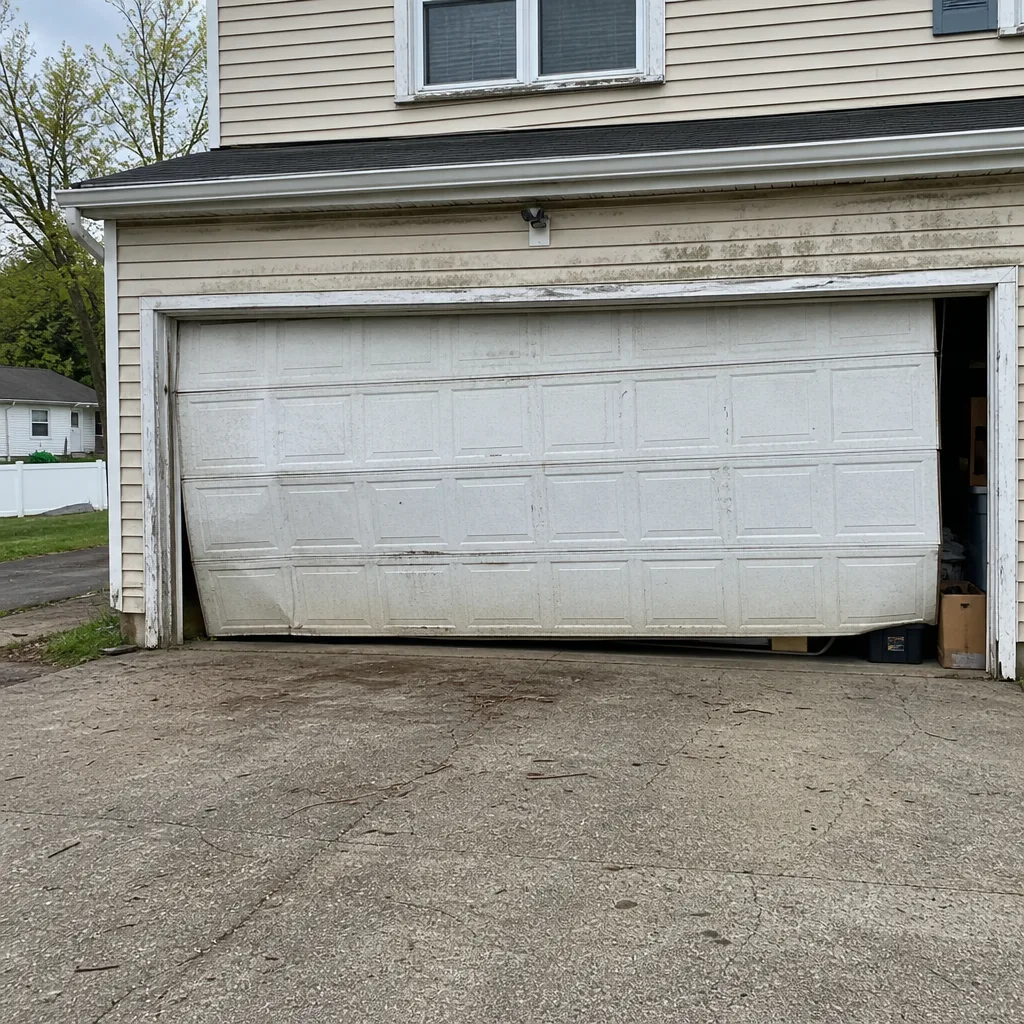 Before
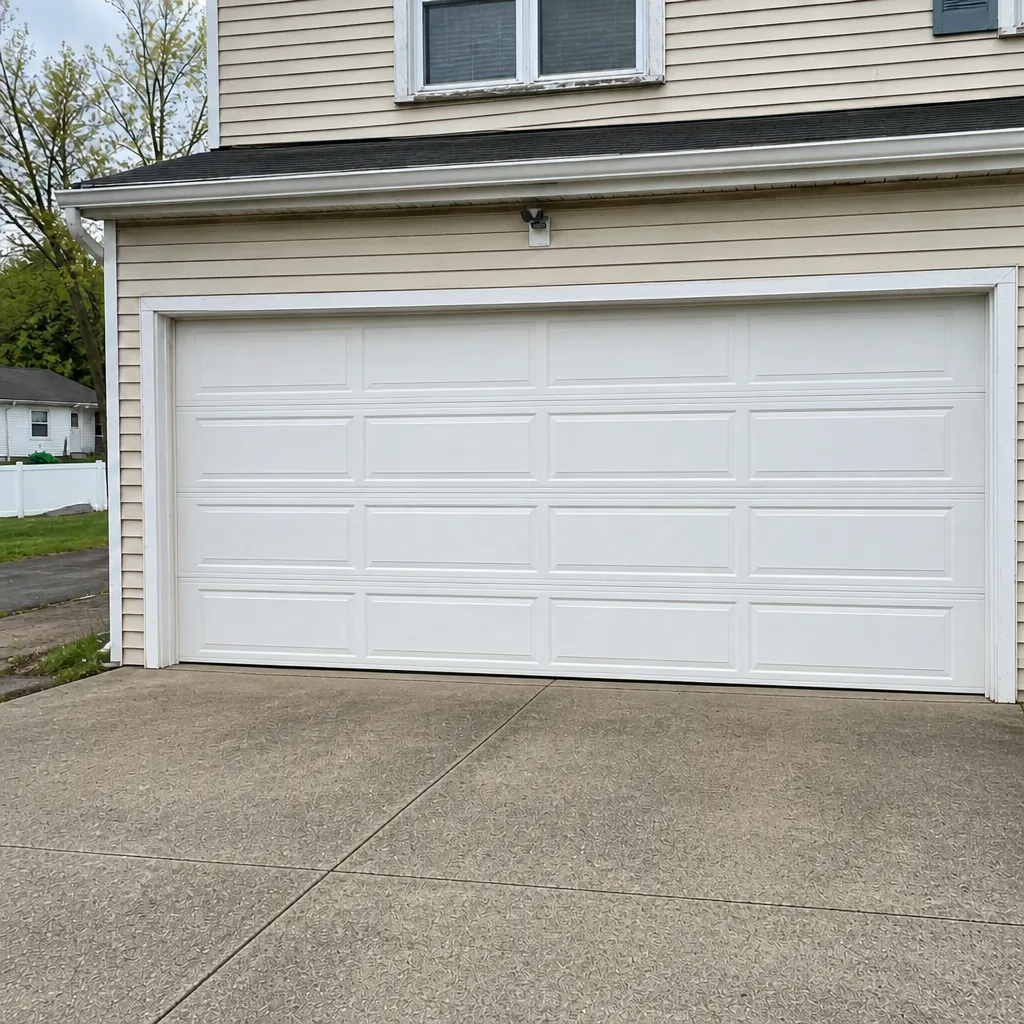 After
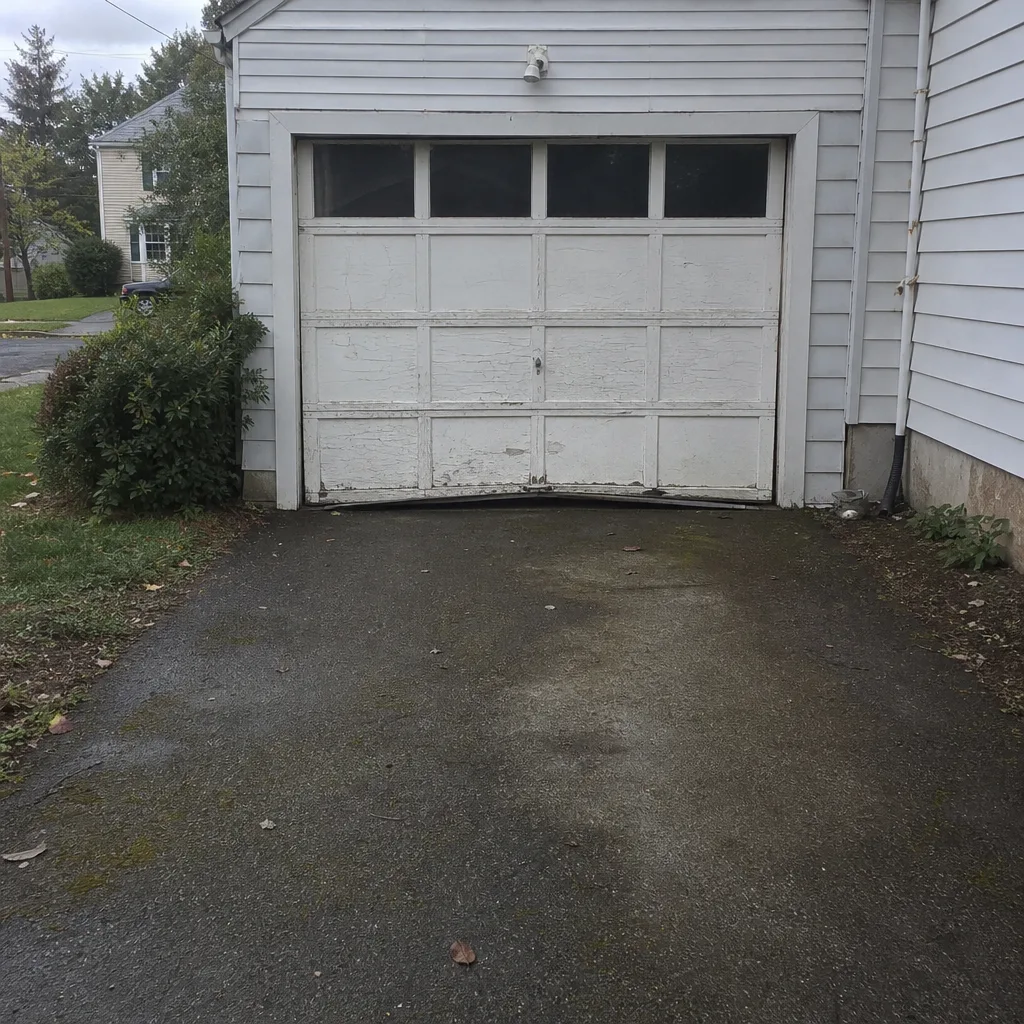 Before
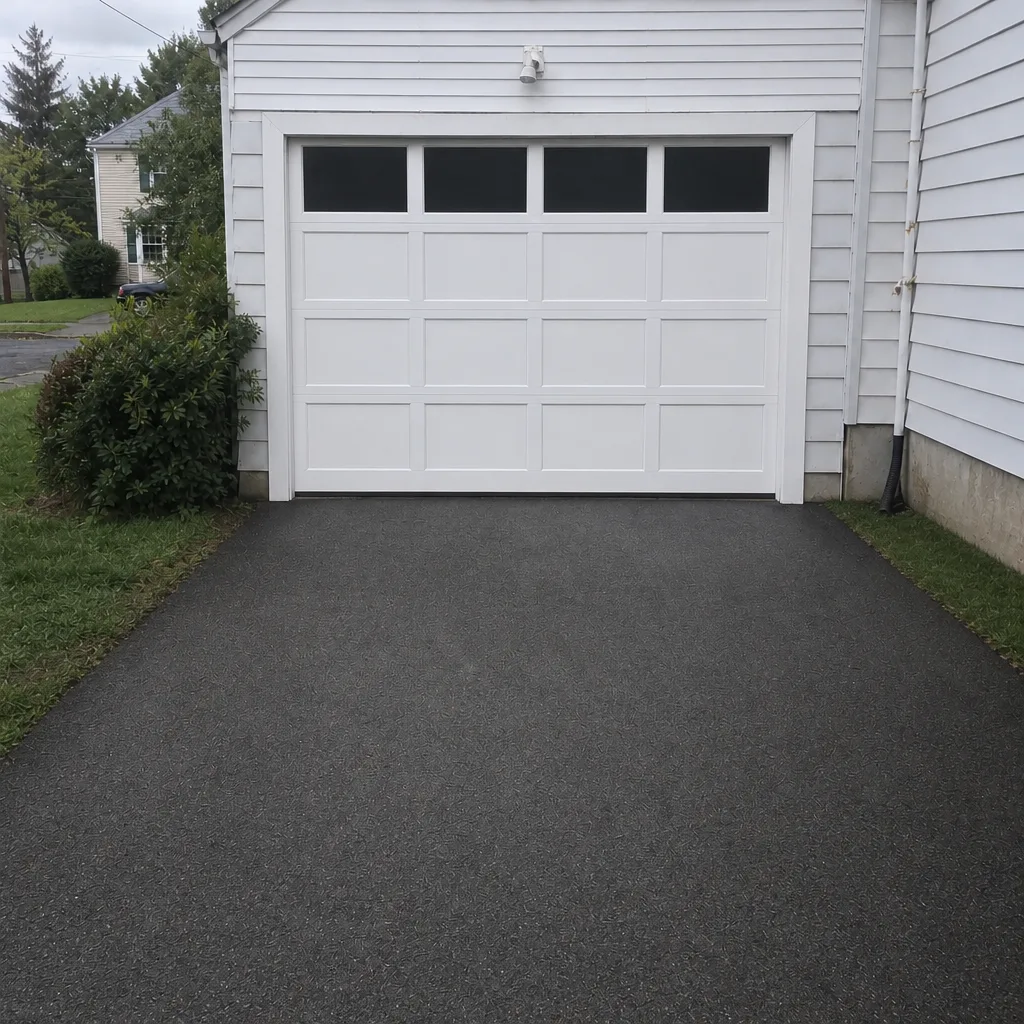 After
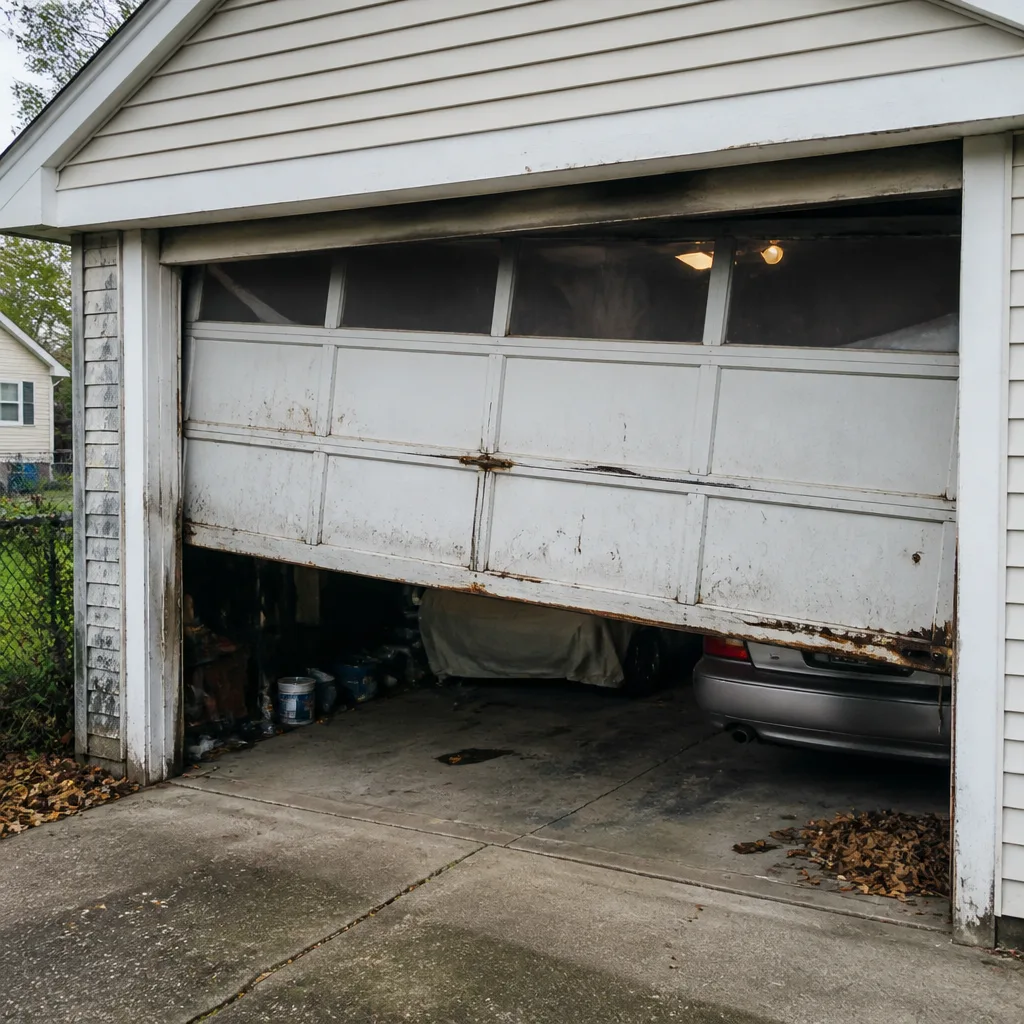 Before
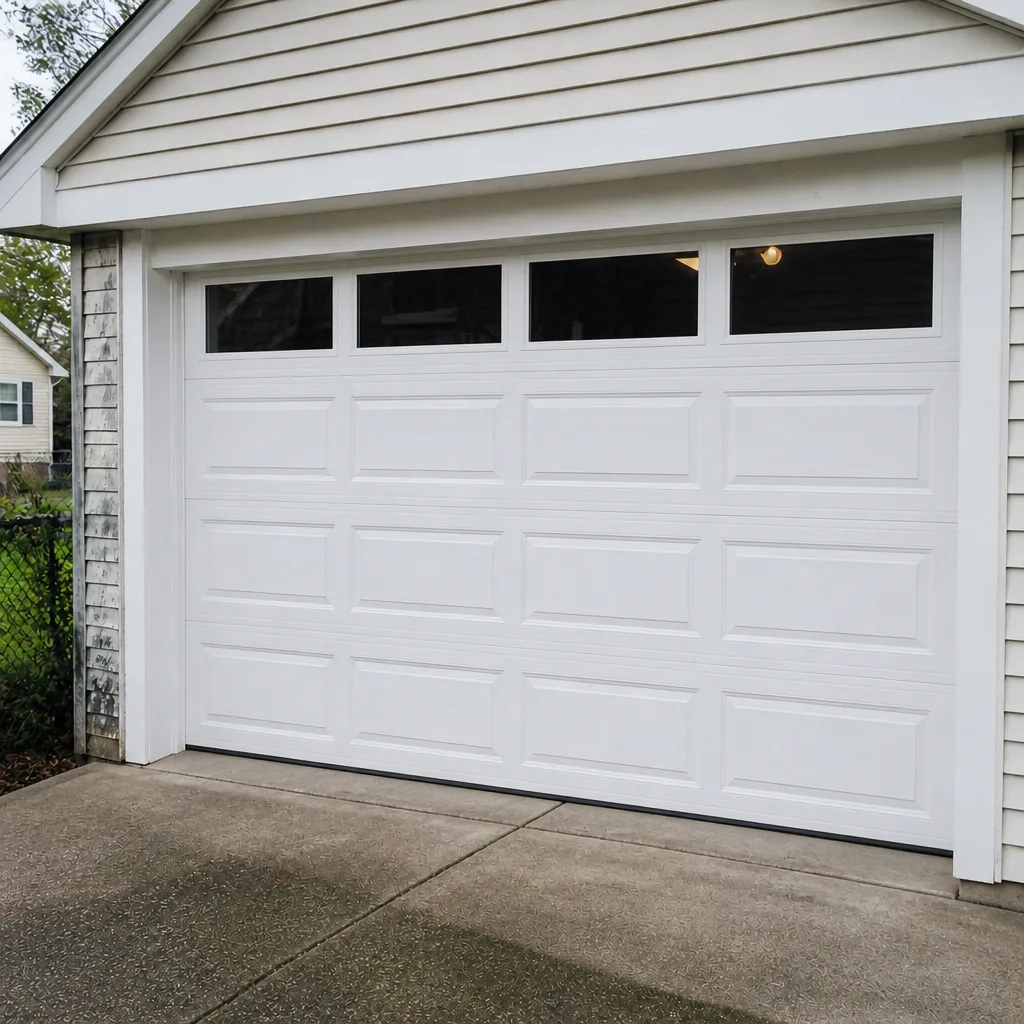 After
When to Call a Professional
Call a professional the moment you see any Tier 3 sign: a broken spring, a frayed or kinked cable, a door that hangs unevenly and won’t stay open, or a door that won’t stay closed. Those are safety and security issues, and they don’t improve on their own. Call for Tier 2 signs as well, because a binding track, a straining opener, or a drifty limit switch is a known fix that gets bigger with time. And call if you’re simply not sure which tier a symptom belongs to. A specialist can look at the door and tell you in minutes what’s wearing and what’s not. New Britain Garage Door Repair Pros offers free estimates in New Britain, and we’re structured for fast response when a door is blocking a vehicle or leaving a garage unsecured. Call (855) 959-3390.
Frequently Asked Questions
Unusual noise is typically the first warning sign, followed by slow or uneven travel. A new grinding, popping, or scraping sound usually tells you which component is wearing, and catching it early keeps the repair small. Call (855) 959-3390 for an exact quote; estimates are free.
Spring repair in New Britain typically costs $180 to $340 for one spring, depending on the spring type and the door. A matched pair is usually replaced together, so a pair runs about twice that. The written estimate you get before work starts sets the final price. Call (855) 959-3390 for an exact quote; estimates are free.
No. Torsion and extension springs are under extreme tension, and adjusting or removing one without the right tools and training can cause serious injury. This is the one repair on your door that should always go to a specialist. Call (855) 959-3390 to schedule spring repair.
Yes. A door that’s slower than last year is usually straining because the springs aren’t carrying the door’s weight or the track is binding. A slow door is a symptom, not a normal age change. Call (855) 959-3390 for a diagnostic visit and free estimate.
Yes. New Britain’s freeze-thaw cycles stiffen springs, crack seals, and let water into tracks where it freezes and expands. Summer humidity speeds surface rust. That’s why a fall check before the first freeze tends to catch more than a midwinter one. Call (855) 959-3390 to book a check.
A ground-rule test tells you: disengage the opener and lift the door by hand. If it’s heavy or won’t stay up, the door’s balance is the problem, not the opener. If it lifts easily and the opener still strains, the opener needs service. Call (855) 959-3390 and we’ll sort it out on site.
The Bottom Line
Garage door warning signs are not subtle, but they are easy to normalize. The fix is to treat every change as a data point: match the sound to the component, read the springs and cables without touching them, watch the travel, and check the opener for strain. Then apply the three-tier system. Monitor the squeaks. Schedule the grinding, the slow travel, and the drifty limits. Stop everything the moment a spring breaks or a cable frays. Done once a month, the five-minute inspection catches most of this before it turns into a bigger repair, and it’s the single most useful habit a New Britain homeowner can build around their door. When a sign lands in Tier 2 or Tier 3, call us at (855) 959-3390 for a free estimate. A specialist, not a generalist, will look at it and tell you exactly what’s going on.
Written by the team at New Britain Garage Door Repair Pros.